


An aging population, lack of rural treatment and health care, low alcohol taxes, and a pervasive drinking culture all contribute to the high death rates.
By Khushboo Rathore
Oregon Journalism Project
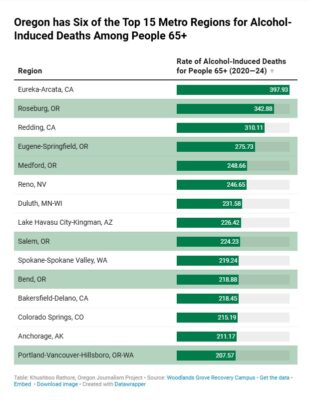
Six Oregon metro areas have some of the highest rates of alcohol-induced death in the nation for people 65 and older, according to a recent industry study.
Roseburg (second), Eugene-Springfield (fourth) and Medford (fifth) are among the top five nationally. Salem (ninth), Bend (11th) and the Portland metro area (15th) fill out the ranks with other cities such as Anchorage, Alaska; Reno, Nev.; and Spokane, Wash.
The report, based on data from the U.S. Centers for Disease Control and Prevention and the Census Bureau, draws attention to a chronic Oregon public health problem:
Oregonians die from alcohol at a rate 83% higher than the national average, according to CDC data. It’s a problem that has gone unchecked for decades.
The new report on the metro areas with the highest alcohol-induced death rates was released in early June by Woodlands Grove Recovery Campus, a substance abuse and mental health treatment center in Ohio.
CEO John Daily says his company is treating more older patients for alcohol issues than ever before. One reason for the increase seen in Oregon and elsewhere, he believes, is the heightened social isolation in rural areas caused by the COVID-19 pandemic and its aftermath.
“They’re by themselves and now they’re drinking, ” he says.
Alcohol is the third leading cause of preventable death in Oregon, according to deputy state epidemiologist Tom Jeanne, trailing only tobacco and obesity.
“Even a couple of drinks a day every day can harm your health,” Jeanne says. “It raises your risk for multiple types of heart disease and all sorts of other [illnesses].”
Although alcohol consumption in the U.S. is dropping overall, the rate of alcohol use among the baby boomer population is growing, according to a National Institutes of Health study.
Older people are at higher risk of alcohol-induced death because they are more likely to suffer from chronic diseases treated with medications that can interact with alcohol in harmful ways, Jeanne says.
Many of them live in rural areas with limited access to treatment and health care services, which can contribute to alcohol mortality risks, he says.
With its long-standing pride in its craft beer, wine, and distilling industries, Oregon also has a cultural acceptance of drinking that some researchers say contributes to higher rates of alcohol misuse, defined as more than one drink per day for women and two for men.
Oregon’s problem with alcohol can also be attributed in part to the lack of a general sales tax and low specialized taxes on beer and wine, which make them far cheaper in Oregon than in other states, Jeanne says. Higher prices are one of the best ways to discourage excessive drinking, he says.
The state’s beer and wine industries have successfully fought legislative efforts to raise taxes on their products. Oregon’s penny per pint excise tax on beer hasn’t changed in nearly half a century.
“As inflation goes on, especially the big inflation we have now, every year is effectively lowering the tax,” Jeanne says.
To combat this public health problem, the Oregon Health Authority launched a prevention campaign in 2022. “Rethink the Drink” encourages Oregonians to be wary of even seemingly modest drinking.
If you or someone you know is struggling with addiction, you can call Oregon’s free and confidential Alcohol and Drug Helpline at 800-923-4357, available 24/7/365.