





One North Oregon Coast couple learned the hard way. Here’s what they’re doing about it.
By Penny Rosenberg

— Courtesy Jennifer Childress
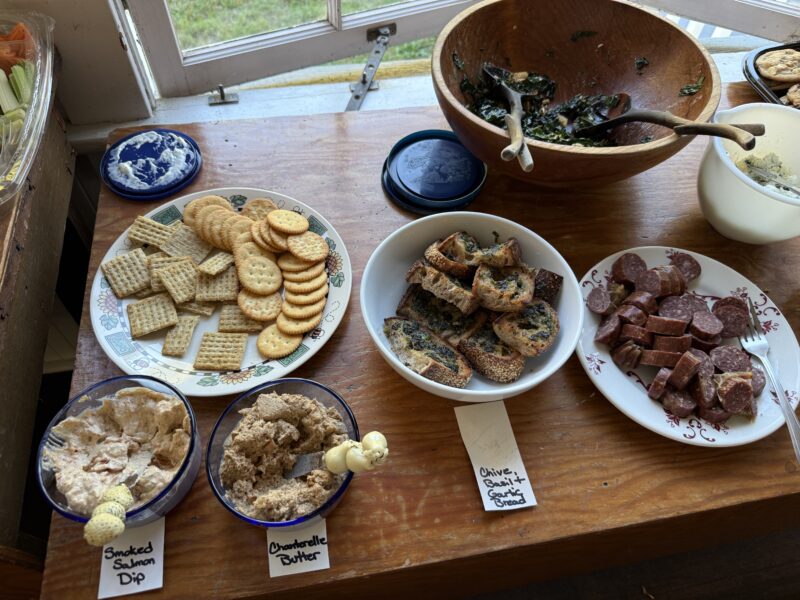
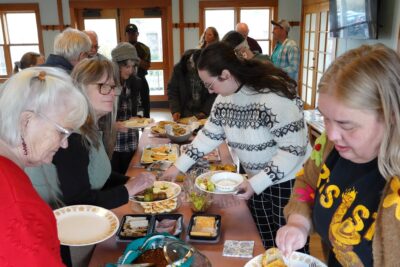
Earlier this year, the couple learned that potlucks open to the public are illegal in Oregon.
It’s true, although, as OJP confirmed, it’s not evenly enforced across the state. Only one county’s environmental health website even mentions potlucks.
Here’s how the Childresses learned they might be outlaws and why they are now trying to change the law. One pie at a time.
— Tolovana Arts Colony photo
Citing the Oregon Health Authority, the state agency that manages health care services, the county health inspector wrote that foods prepared in private homes may not be served to the public: “Public potlucks are therefore strictly prohibited.”
The reason: to prevent “potential foodborne illness” caused by contamination. In fact, having an “illegal” potluck may be prosecuted as a Class C misdemeanor and result in a fine of as much as $1,250 and/or 30 days in jail.
— Penny Rosenberg/Oregon Journalism Project
— Penny Rosenberg/Oregon Journalism Project
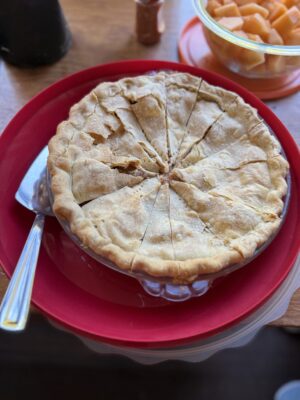
Said retired logger and Nehalem resident Ken Erickson, a big fan of the auction: “Can you imagine people coming all the way from Vancouver, Portland and Salem for a Costco pie?”
It didn’t sit well with Watt and Jennifer Childress. Potlucks, Watt said, are exactly what Oregon needs in this divisive climate.
“This is not a partisan issue,” he said. “Artists have potlucks. Churches have potlucks. Alcoholics Anonymous has potlucks. People need to break bread together.” In fact, former U.S. Surgeon General Vivek Murthy promoted them in 2024 as a way to cure loneliness in the post-pandemic era.
Not so in Oregon.
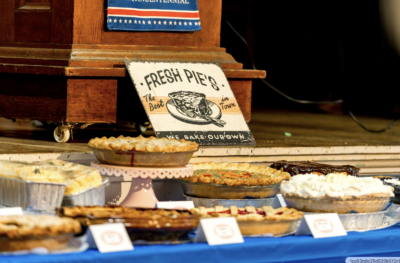
— Courtesy Trav Williams, Broken Banjo Photography
Not all potlucks are illegal in OHA’s eyes. A potluck for a specific group of people is fine. If fans of a particular breed of dog want to gather at a park and share food, they may. On the other hand, if it’s open to all comers, that’s when it becomes a single-event temporary restaurant that may not serve home-cooked yummies. She acknowledges health officials have to suss it out on a “case-by-case basis.”
With unsafe food handling, potlucks can present a health hazard, explains OHA spokesman Jonathan Modie, citing a mass botulism outbreak after a church potluck in Ohio in 2015. One person died from eating a potato salad made from home-canned potatoes.
Nevertheless, it’s likely plenty of “illegal” potlucks are taking place in Oregon; the key to not getting caught is location.
OJP contacted 10 counties across the state: Benton, Clackamas, Crook, Deschutes, Linn, Polk, Marion, Multnomah, Sherman and Wasco; all said enforcement is rare.
But not on the North Coast, where Watt and Jennifer Childress live. Watt is the owner of Jupiter’s Rare and Used Books in Cannon Beach, was a columnist for various local newspapers, and now writes for the Upper Left Edge, an artsy digital publication for the North Coast. And the two are engaged in some homespun lobbying.
In June, the two drove a strawberry rhubarb pie to Salem to give to Gov. Tina Kotek. They’re not sure the governor ever received it, but staff accepted the pie with apparent delight, Jennifer Childress said. They also brought pies to their local legislators.
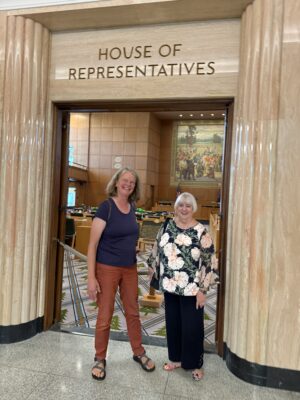
— Penny Rosenberg/Oregon Journalism Project
Grange President Susan Noah had no idea Oregon banned public potlucks until Childress’ grange brought it to the state grange’s attention. Coincidentally, the nonprofit had just wrapped up promoting community potlucks as part of the nation’s 250th birthday.
“We were all shocked to find out that what we were promoting to go along with the 250th celebrations was illegal in Oregon,” Noah said.

There’s no definitive national database of state food laws that address potlucks, but Watt Childress’ research finds Oregon’s to be among the most strict, while Minnesota’s, which specifically exempts potlucks from food safety laws, is the most permissive.
Arizona changed its laws in 2016 to follow suit, and Massachusetts allows potlucks as long as signage discloses that the food served was cooked in home kitchens, not unlike the warnings on restaurant menus about raw meats, seafood or eggs.
If a bill is proposed, Goldfarb said, OHA will weigh in on its impacts and potential risks but won’t take a formal position on it. “It’s up to the Legislature to decide.”
Rep. Javadi said Oregonians shouldn’t have to “jump through some bureaucratic loopholes or bureaucratic hurdles” just to have a potluck. He hopes to introduce the law early next year—if he’s reelected, which isn’t a sure thing given his new party affiliation.
But Javadi vows to find co-sponsors who will pick up the baton—or pie server—should he not retain his seat.
“There shouldn’t be a revenue or a fiscal impact at all with this bill, so it’s going to have that going for it,” he said. “This will just be a straight-up policy bill. My hope would be we get it in early before a lot of the big, meaty bills that will take some more of the Legislature’s time.”
Asked for comment, Gov. Tina Kotek’s office sent an email: “The governor is aware of the issue and has asked staff to work with the Oregon Health Authority to review statutes and administrative rules related to potlucks to understand potential changes to address local concerns.”
In Clatsop County, where the Childresses first learned they were potluck scofflaws, Commissioner Lianne Thompson is sounding her support to get the law changed. With three months left in a 59-year career of public service, Thompson says she’s willing to “speak up for pie.”
“For heaven’s sake, we have to maintain our humanity,” Thompson said. “How can someone not be for motherhood and apple pie?”