




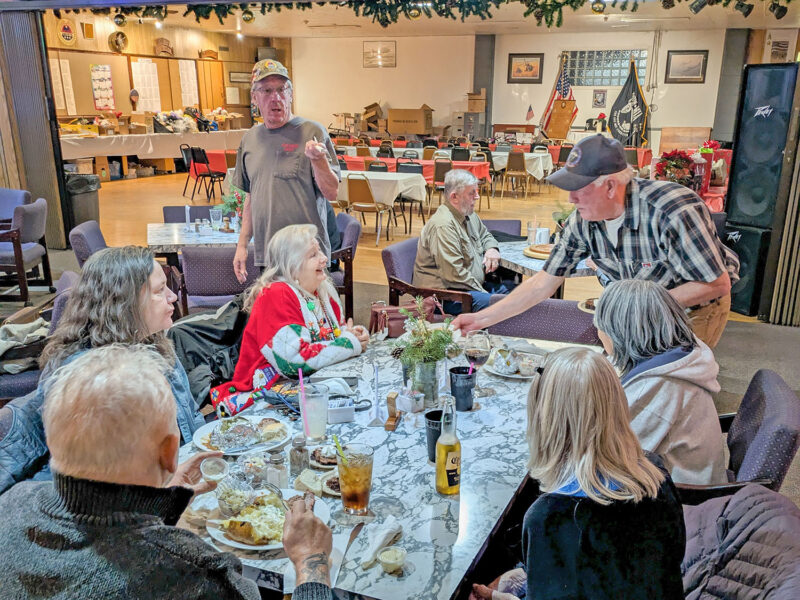
When members of Sons of AMVETS heard their local VFW Post #3437 might be at risk of shutting down, they bought some brisket and said “Let’s host a fundraiser.”
While the Sons of AMVETS hosts a public dinner service at the post once a month and puts the proceeds in their own till, this time around they opted to give the proceeds to the VFW because, essentially, it’s their home.
The fundraiser dinner, held Friday, Dec. 19, offered guests cowboy beans, baked potato, and a choice of pulled pork or brisket at $20 a plate.
The crux of the problem at the VFW boils down to inflation. Tim Geil, commander of the Sons of AMVETS, said the cost of food and everything else is getting harder to balance.
While the public at large is welcome to enjoy breakfast on Sundays and dinner two Fridays a month, the VFW is otherwise technically not available to them unless they are a member’s guest.
As such, not just anyone can stop in and buy the VFW’s affordable meals. And even if the VFW did make the business open to the public in order to draw more revenue, costs would increase due to tax liabilities.
So the VFW must rely on club member patronage to keep the business afloat. That, too, may pose a problem as time goes on because “there’s just no new members, no younger members,” Geil said.
Different military organizations pay a membership fee to use the VFW, or to use the kitchen for an event. They also use the building to provide free holiday meals, host school supply drives, and give out Thanksgiving and Christmas food boxes, said VFW Quartermaster Ryan Matteson.
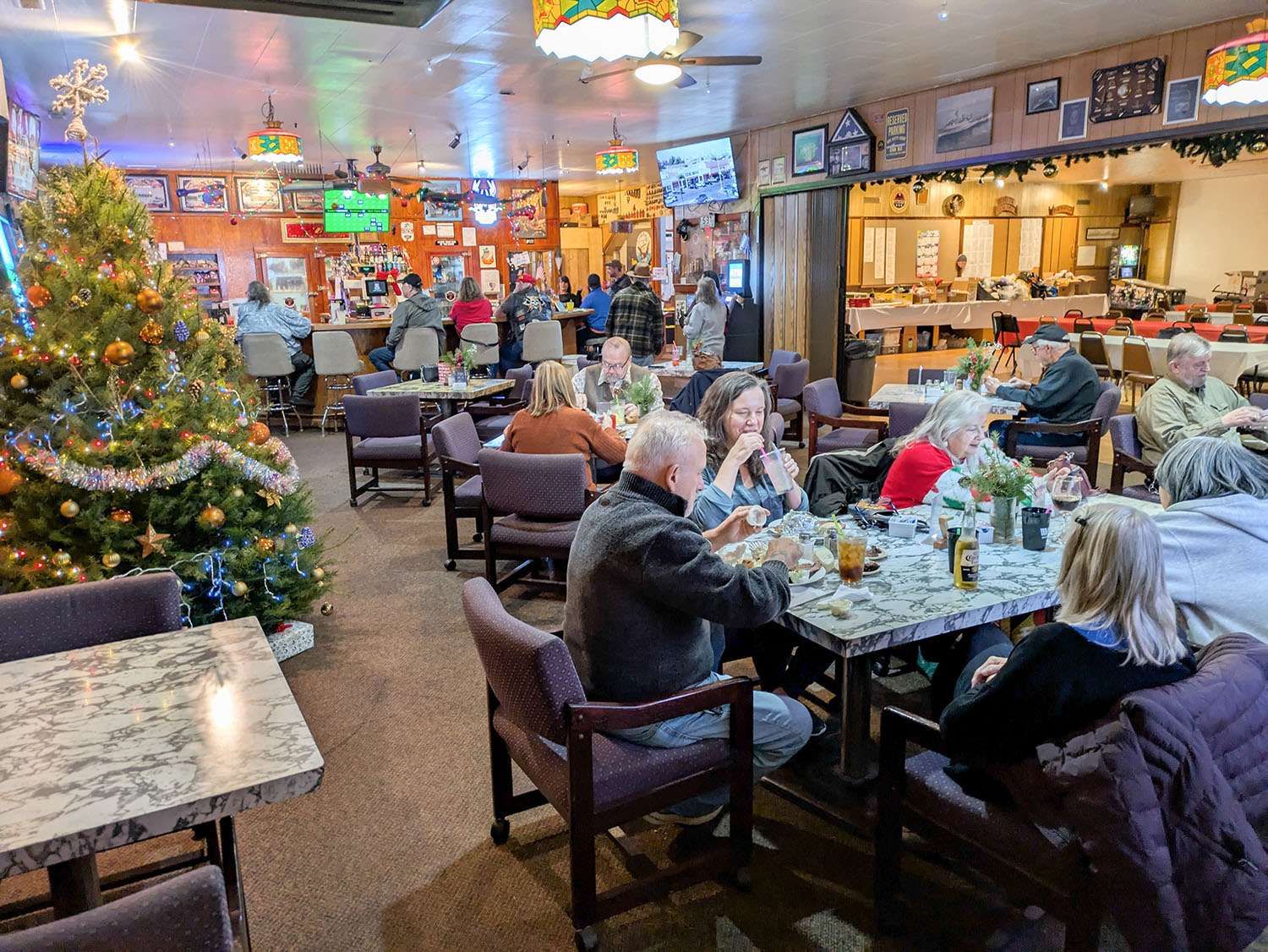 Regardless of what they have done to trim costs, though, VFW’s bills seem to double every year and salaries go up, he said. If a bill was $500 a couple years ago, it’s now $800.“Everything’s expensive; it’s outrageous,” Matteson said. “Most of our customers here are fixed-income people, so if you raise the price, you just drive the customers out the door.”
According to Matteson, it costs approximately $22,000 a month to operate the business. On busier months in the winter, revenue tends to keep up with expenses. But it’s the warmer months that “go upside-down” while their customers opt to spend more time outdoors.
Beside the obvious bills such as water, electricity, garbage, Internet and cable, and bar and kitchen commodities, other bills include county health department fees, required hood and grease trap cleaning, insurance, and membership dues and fees.
And even though the VFW is a nonprofit, they’re still required to financially operate as though they’re a commercial business. That means they have to pay commercial prices for insurance, Internet, cable and the like.
So if they have a football game on the TV or play music, they are, in theory, making money off it, which means they must pay licensing fees for access.
“And it’s like, we’re private members, it’s like our own living room,” Matteson said.
The VFW is not just a hang out spot for military families. In addition to providing for the community’s needs during the holidays, the member organizations serve in other ways, such as setting flags along Main Street 13 times a year (it used to be 22 times a year), host essay contests and scholarships for students, and feed the homeless.
If anyone in the community wants to help, they could pitch in with volunteer services, donate items that need replacing (such as chairs), provide cleaning services (chairs, grease traps), or patronize the place as a guest.
If revenue continues to decline and costs continue to go up, Matteson doesn’t think the VFW would shut down “per se,” but he again emphasized how “outrageously expensive” it is to operate the bar.
“Right now, the official standpoint for this post is ‘try to ride out the storm,’ and hopefully inflation comes down, hopefully people’s income increases and prices settle,” he said.
And although that storm comes in waves, every year “the waves get bigger, the boat gets smaller.”