
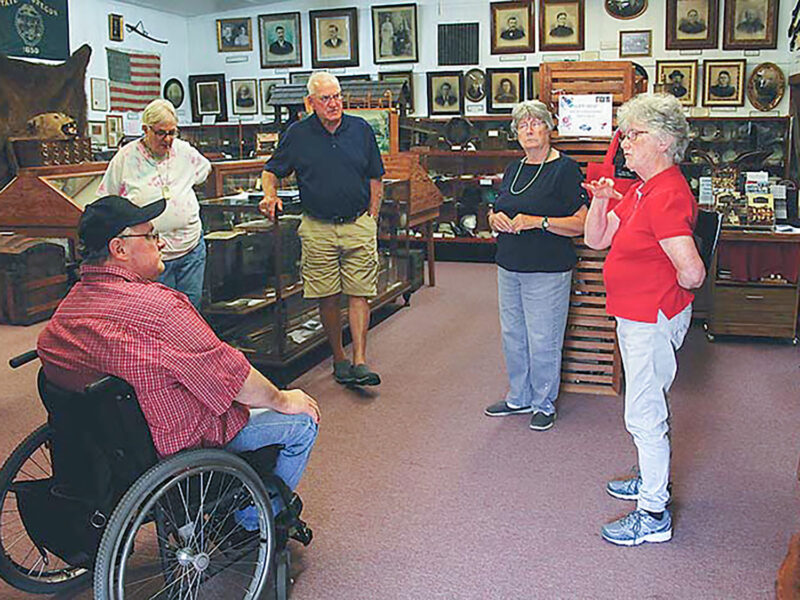
“Lebanon has a history worth preserving, and the town should have a museum.”
That’s the message the Lebanon Museum Foundation wants the community to understand and believe, according to Linda Ziedrich, vice president and one of the foundation’s founding members.
It didn’t take long shortly after the museum foundation’s formation eight years ago that the museum group started receiving collections of historical significance to the city. But all that is currently sitting in storage.
Recently, Scroggin’s Mill Rural Heritage gifted the foundation a $13,822 gift following the sale of Scroggin’s Mill and dissolution of the organization, which planned to turn Scroggin’s Mill into a museum, primarily for logging, lumbering and farming equipment.
Lebanon’s museum board issued a press release stating “the gift from Scroggin’s Mill Rural Heritage brings the museum closer to finding a home for its collection and opening the doors to the public.”
According to Paul Aziz, president of the Lebanon Museum Foundation, the financial gift raises their cash stash to just over $25,000 toward a $250,000 goal intended to secure a safe building for a local museum.
“With the recent donation to the foundation, we are in a better position to be able to look at options,” Aziz said.
And they are open to “all options,” he said.

The Lebanon Museum Foundation was born through Aziz, who, as mayor at the time, initiated the move to bring a museum to Lebanon after community input for the Lebanon 2040 Vision in 2015 revealed a strong interest in preserving Lebanon’s history.
But this hasn’t been the first time interested parties attempted to give Lebanon a museum. Several different efforts have come and faded since the 1970s, including Scroggin’s Mill Rural Heritage.
According to Pete and Jan Boucot, founders of Scroggin’s Mill, the nonprofit had to end its efforts due to a lack of support to get it opened. The overall scope would have cost a lot, as fixing the roof alone would have cost upwards of $200,000.
The City of Lebanon had donated $500 toward fencing, but “very few people” showed interest in continued support.

“After a number of years it just made sense to us to shutter our organization and donate the money to the museum and the Lebanon Genealogical Society,” Pete Boucot said.
Albany & Eastern Railroad purchased the Scroggin’s Mill property. Boucot told The New Era his understanding is that the new owner wants to protect the historical building and is considering using it as a train museum.

In 2018, an ad hoc committee for the city was formed, which created the basis of the Lebanon Museum Foundation. Since then, the museum board has toured local museums, collected hundreds of items and continues to raise money for its future home.
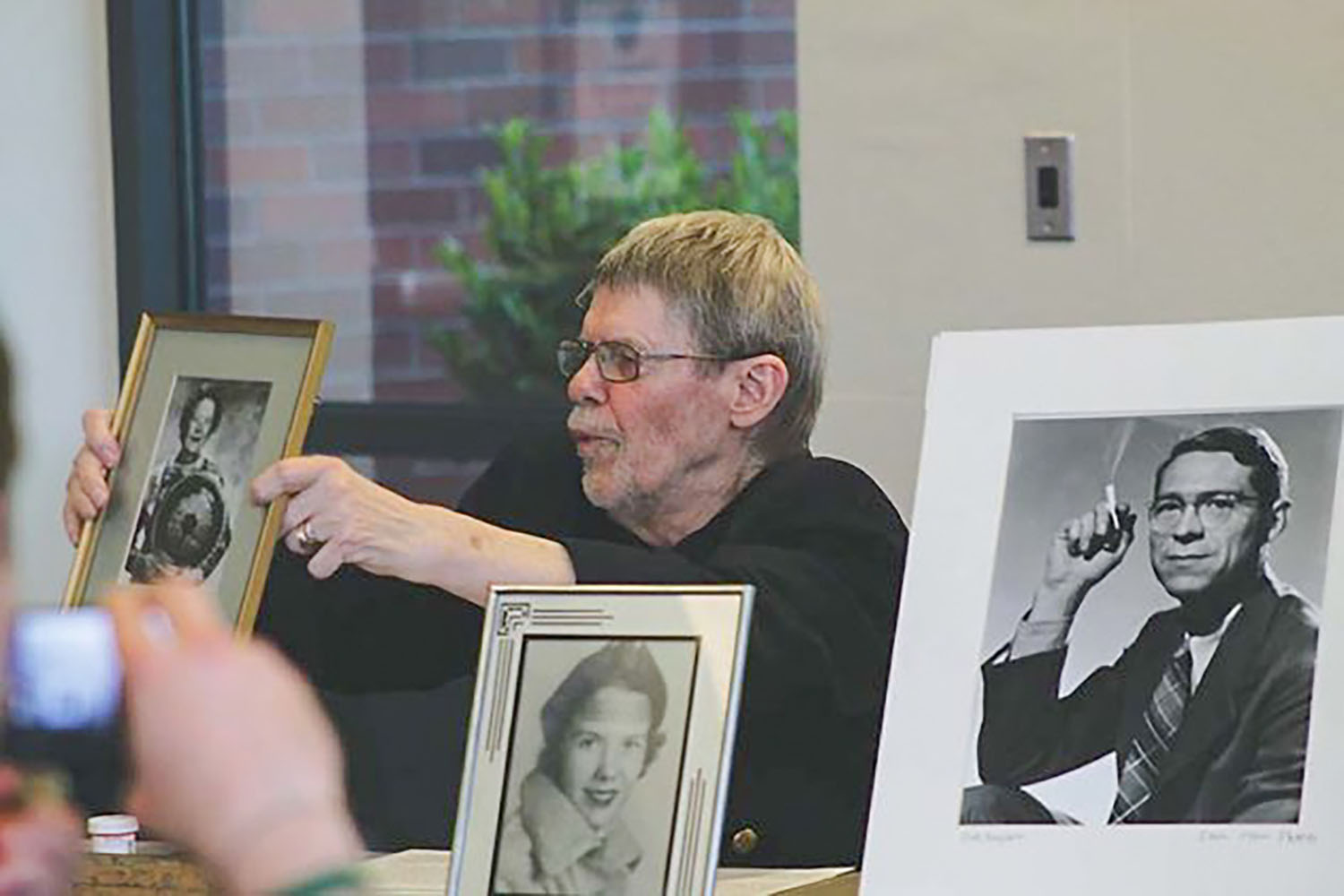
To kickstart their efforts, the City of Lebanon seeded the foundation $10,000, and a former Lebanon museum effort donated its own collection. Since then, other collections have been acquired, including, according to curator Thonni Morikawa, “an incredible collection of historical phones” from someone who worked 40 years at the original telephone company in Lebanon, WWI and WWII uniforms (one of which was donated by Frank Groves), Bohle Creamery items donated by Dorothy Page from her family’s Lebanon Creamery Company, and photographic collections from five different donors.
There are also several collections “on hold” by the donors themselves until a big enough space can be found to house them.
Without a building, many of the collections remain hidden from public view in a temperature-controlled storage locker.
“It bothers my curatorial senses to have everything shoved in a storage unit,” Morikawa said.

The board has looked at “numerous” buildings during the past few years, but none of them so far have worked out, Aziz said.
They looked at Linn-Benton Community College’s annex building next to the hospital, the old CenturyTel building on S 2nd Street, the former Elk’s Lodge on Maple Street, the former Lebanon Express building on Grant Street, the current liquor store building on Main Street “and quite a few others that have come and gone on the market,” Aziz said.
They also tried working with organizations that might be interested in donating a building, but no one has yet been responsive to that idea, he said.
When the foundation set a goal for $250,000, they figured that would be enough to buy a building, Ziedrich said. Today, it might just be enough to renovate a building.
“We really won’t know how much we need until a suitable building becomes available and the owner or an intermediary is willing to hold it for us while we raise any money required to buy it,” she said.
More recently, the board reached out to the city and City Council with their continued need for the right building. City Manager Ron Whitlatch said he’d like to do a property inventory and return to council with any properties that might be something they’d want to take off the city rolls.
“So we are hopeful,” Aziz said, suggesting the city might make some property available for a museum.

Meanwhile, the foundation stays busy behind the scenes, hosting historical presentations and tours, partnering with community organizations, cataloging and cleaning donations, scanning old photographs, recording oral history stories from locals, applying for grants and other fundraising opportunities, and maintaining its website and social media presence.
With a collection worth keeping for future generations, all the Lebanon Museum Foundation really needs is $250,000 and/or a temperature-controlled, securable building that is, at minimum, 800 square feet with accessibility for people with disabilities.
As a nonprofit organization, Aziz reminds the community that all donations are tax deductible. For more information, visit LebanonMuseum.org.
“I think the board members will all feel greatly relieved when we’ve settled on a building,” Ziedrich said. “We may have to carry out some serious fundraising, but then the fun begins.”