


By Satina Tolman
For The New Era
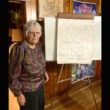
For more than five decades, Janella Spears has quietly served as a bridge between the deaf and hearing worlds – using her hands, her medical training, and her faith to ensure that deaf individuals are not left unheard or unseen.
Spears’ journey into the deaf community began long before professional titles or degrees. In 1966, at just 18 years old and newly enrolled in college, she met her future husband, Thomas Spears, on the tennis court. Thomas was hard of hearing, and it was he who first taught her sign language – an introduction that would shape the course of her life.
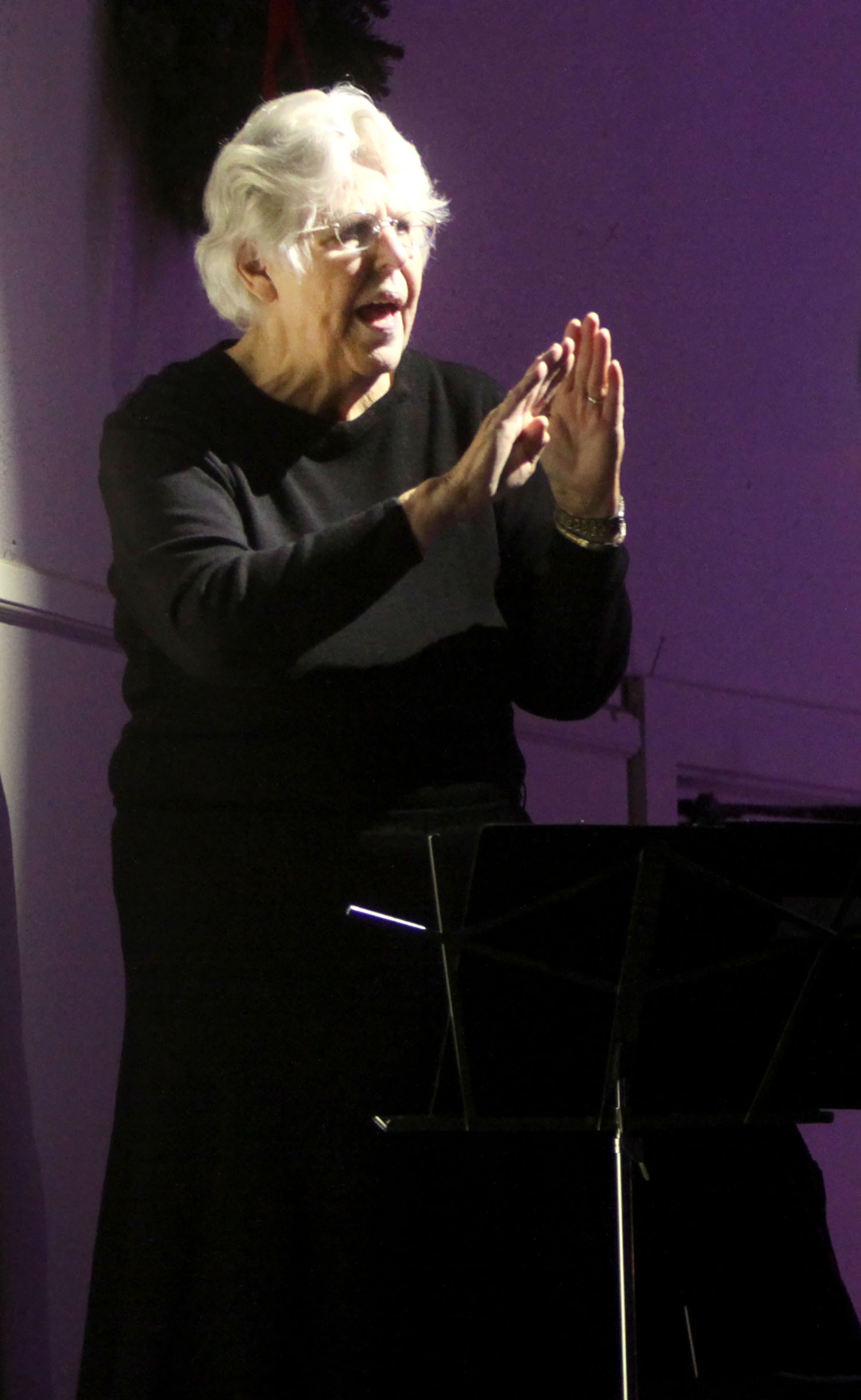 They married in 1971 and moved from Riverside, Calif., to Oregon, where they began raising their family. During those early years, Spears taught sign language in the Lincoln City and Newport school districts while Thomas worked in Oregon’s state park system. In 1980, his career brought them to Sweet Home when he was hired as a park ranger at Cascadia State Park.
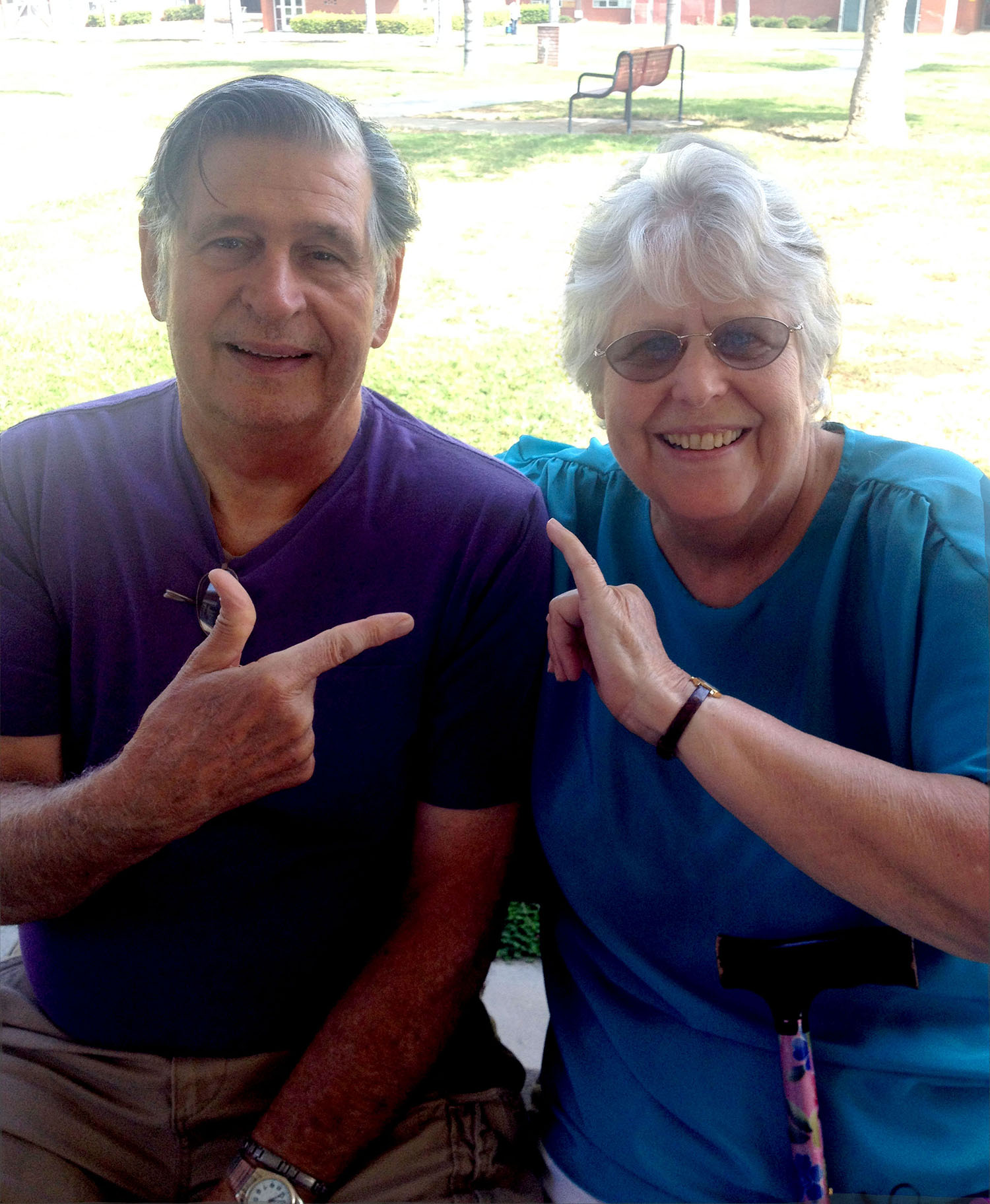
Thomas Spears holds a distinction that remains rare even today: He is believed to be the first – and only – deaf employee to work within Oregon’s state park system. His success, supported by Janella’s interpreting and advocacy, reinforced her lifelong commitment to accessibility.
As Spears pursued nursing, earning her registered nurse credential in 1982, her interpreting work expanded into medical settings. In the 1970s and 1980s, she helped hospitals and emergency rooms – including the Albany Emergency Room – learn how to communicate with deaf patients using TTY devices (Telecommunication Devices for the Deaf), a then-new technology that allowed typed conversations over phone lines.
“Back then, people were just learning how to work with TTY,” Spears said. “I helped staff understand how deaf patients communicated—and helped deaf individuals learn how to use the equipment.”
While video phones have largely replaced TTY technology today, Spears continues to assist those who still rely on it, ensuring no one is left behind as technology evolves.
Over the years, Spears has interpreted across Oregon – from Portland, Salem, and Roseburg to Bend, Redmond, Medford, and Madras. Her work goes far beyond formal appointments. She regularly accompanies deaf individuals to grocery stores, dental offices, hearing aid providers, and other everyday errands, helping them navigate systems that often overlook accessibility.
She also volunteers extensively. Every Sunday, Spears serves as an interpreter at Community Chapel. She volunteers at Meadowlark Retirement Center in Lebanon, supporting deaf siblings who reside there, and assists local police when communication is needed with deaf individuals experiencing homelessness or navigating HUD housing.
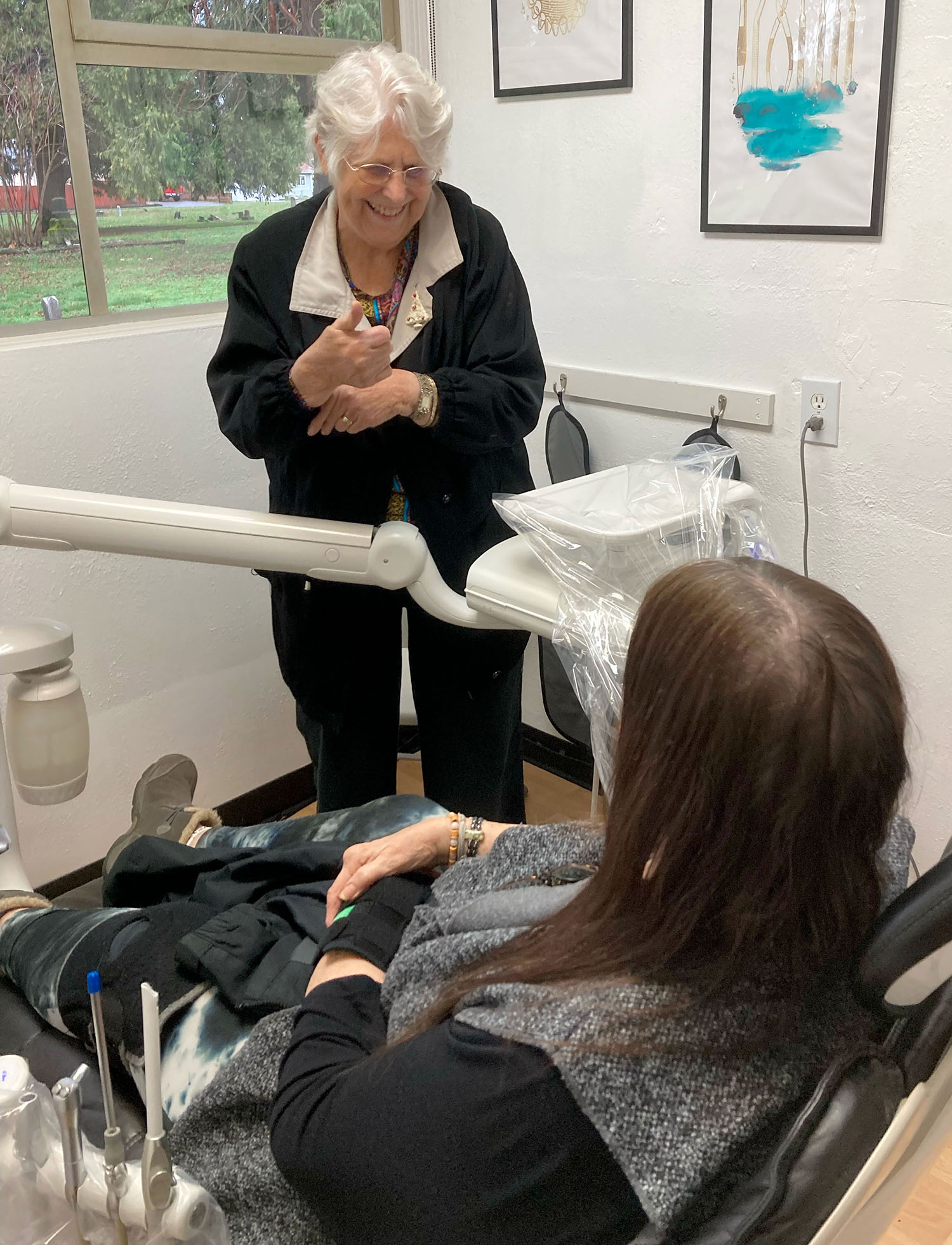 Fluent in both American Sign Language and Pidgin Signed English, Spears is adept at adapting her communication style to individual needs. She also understands the regional “accents” within ASL – variations that reflect geography, culture, and community.
Although Spears occasionally receives paid assignments through interpreting agencies – typically one to three per month when certified interpreters are unavailable – she never pursued full certification herself.
“I didn’t become certified because it was part-time work, and I worked full-time as an RN,” she explained.
Instead, she deepened her qualifications academically, completing sign language coursework at Western Oregon University and earning a master’s degree in Disability Counseling in 2002, with an emphasis on vocational rehabilitation for both deaf and hearing individuals.
That expertise remains in demand. Spears frequently helps deaf individuals apply for jobs, navigate computer systems, and pursue new employment when physical limitations or injuries prevent them from continuing previous work. With vocational rehabilitation services often backlogged, her assistance fills a critical gap.
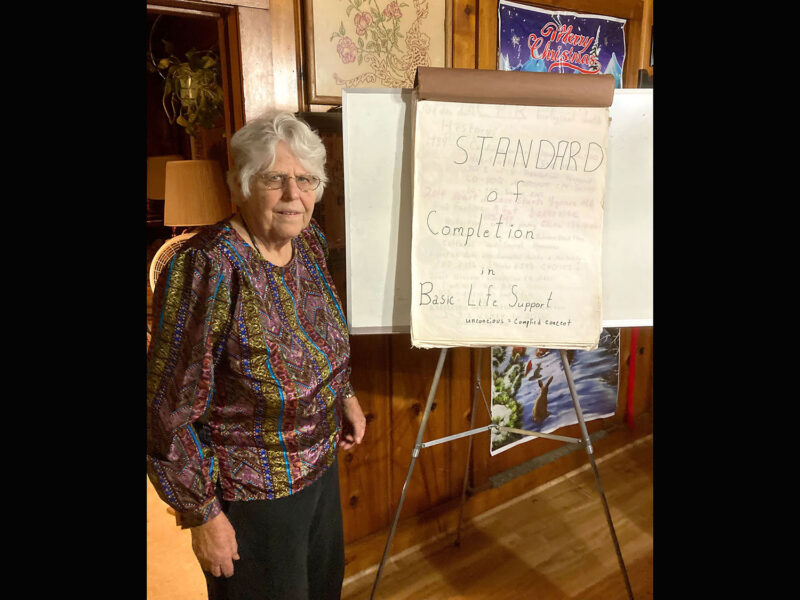
As a nurse, Spears has also devoted decades to education. Beginning in 1991, she taught CPR in nursing homes, later expanding to include CPR and First Aid training for foster care homes, including those serving deaf foster families in South Salem. That same year, she volunteered at Camp Taloali in Stayton, a residential camp for deaf children and adults, where she set up first aid stations and certified deaf staff in CPR and First Aid using sign language.
She continues this work today, traveling to foster homes with portable equipment to provide on-site training.
 More recently, Spears has brought accessibility to the arts, interpreting productions such as the Singing Christmas Tree and “The Innkeepers,” ensuring deaf audience members can fully experience performances often centered on music and dialogue.
Faith is another cornerstone of Spears’ service. In 2005, she became an ordained minister so she could officiate weddings in American Sign Language. Since then, she has performed weddings, baptisms, and funerals entirely in sign language for deaf families.
“One Easter, I was interpreting in church when two deaf adult siblings jumped out of their seats and asked to be baptized right then,” Spears recalled. “We went straight to it. You never know how or when God will move people.”