

Police turn to Chevrolet Impala to save money

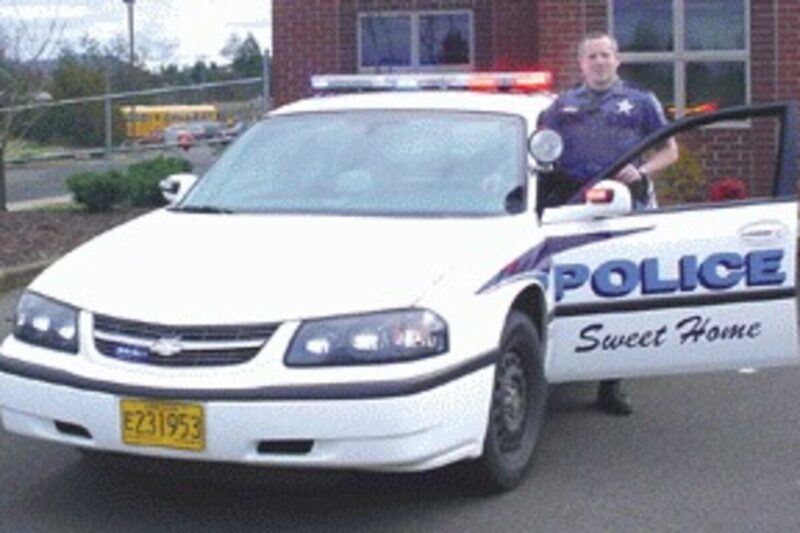
Now, most everyone’s probably seen that new car Sweet Home police are driving.

Local comments are apparently at one extreme or the other. Some think the new car looks great. Others just can’t quite accept the radical departure from the Crown Victorias.

“What I’m hearing is, ‘What a cool robo-car,’ or ‘that is the ugliest thing I’ve ever seen,'” Police Chief Bob Burford said.

Sweet Home Police Department purchased and added a Chevrolet Impala to its fleet last month in an effort to save money in a strapped police budget.

The department had been trying to get by without buying new cars, but with all but one car in its fleet with more than 100,000 miles, the department had to do something. The answer was the Impala, and the department ordered a second one last week.

The Impala, with a V-6, is averaging about five miles per gallon better than the Crown Vics (as police officers refer to the old Fords) with their V-8s.

That means that under hard police miles, the car gets about 17 miles per gallon.

The car has a new paint scheme and a new light-emitting diode (LED) light bar. The newest car will be painted metallic silver.

“Most of the guys seem to like it,” Sgt. Jason Van Eck said. “There’s a couple who don’t. They say it’s too small. There’s a couple that would take either. They’re fine either way.”

The car feels like it has a little more on the takeoff, Sgt. Van Eck said. He didn’t know about the top end, but he didn’t think it seemed like it had a whole lot of passing gear. It has a better turning radius, and it handles well. He hasn’t really noticed a difference moving from rear-wheel drive to front-wheel drive.

The only real complaint is about the size of the car, Sgt. Van Eck said. For some, it’s too small and cramped inside.

In the 1970s and early 1980s, police cars were mostly Chryslers, big gas-guzzling muscle cars, Chief Burford said. In the early 1980s, police went to K-cars then on to the Chevrolet Caprice, which remained in wide use until the mid-1990s.

“The Caprice was a pretty good police car,” Chief Burford said. “Then they dropped out of the market.”

The Crown Vic was about all that was left in the market with rear-wheel drive specifically made for police use, Chief Burford said. While officers’ personal vehicles are often front-wheel drive, they have typically been trained in rear-wheel drive cars.

The maneuvers and techniques, including handling, slide recovery and cornering, are different between the two, Chief Burford said, so most agencies have not wanted to make the leap to front-wheel drive with a steep learning curve ahead, but emergency vehicle operations courses are now available for front-wheel drives.

In the last couple of years, Chevrolet has come back into the police market with the Impala and a Tahoe along with Dodge and its Magnum.

With the department’s budget facing shortfalls, “we’re stepping out and trying new things to save even a few bucks here and there,” Chief Burford said. The car is about $1,700 cheaper, and it gets better mileage. Based on assumptions, like the current gas price, the car will save about $1,700 per year.

“To my knowledge, I think we’re the first ones in Linn County to try one of these out for marked patrol service,” Chief Burford said. “I believe some (agencies) may be using them as administration cars.”

Chief Burford wanted to find out how the officers liked it before ordering the second.

“It’s got to be something that the officers feel comfortable in,” Chief Burford said. “They’re the ones driving it. It’s their office eight hours a day.”

From an administrative viewpoint, it’s much better than the Crown Vic, and the car will likely save money in repairs.

The new light bar is more expensive, but it has a longer life expectancy than the old rotary light bars. Those are rotated out over a five-year period. Chief Burford hopes to get at least 10 years out of the LED light bars, which have no moving parts to wear out.

The LED lights also help gas mileage and puts less strain on the electrical system, drawing some 11 amps compared to 55 amps for the rotary lights.

The new cars also have electric seat adjustment to help officers adjust for their various heights.

Total
0
Share