



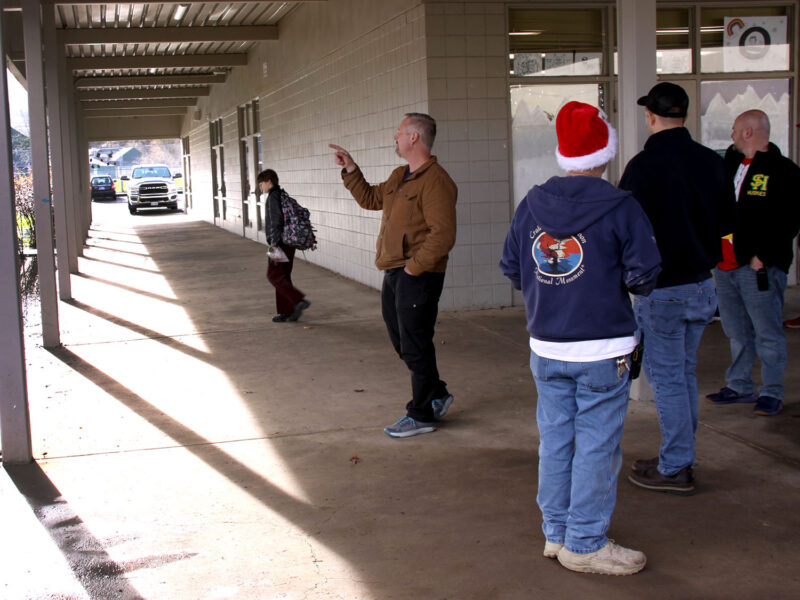

Aaron Huff stood in a breezeway at Sweet Home High School on the last day of school before Christmas break and watched students scurry hither and yon, most heading to classes.
The vice principal was one of several school and district officials taking a walk through the campus, noting some of the issues that have prompted the district to propose rebuilding parts of the campus.
The district had gotten news earlier that morning, Dec. 19, that it is in line to receive a $12.2 million Oregon School Capital Improvement Matching grant aimed at improving student safety and security and upgrading classrooms and career and technical education facilities. The grant is contingent on voters approving a bond measure in May 2026, which would be structured to maintain the current tax rate, according to district Business Manager Kevin Strong.
 The grant represents a “use it or lose it” opportunity for the district. If voters approve the
bond, Sweet Home would receive the full $12.2 million in state funds to offset local costs. If
the measure fails, the money would be reallocated to other school districts across Oregon.
The walk around campus allowed participation to take in some of the problem areas that would be addressed by the grant funding, Strong said, which have prompted concerns in recent months about intrusion by strangers, students who come and go freely, and basic construction issues – particularly flat roofs on which water pools.
Highlighting Needs
One of the biggest needs on campus, Strong and others said, is security.
Security for the high school would be a priority if voters approve the funding, he said.
 The high school currently has more than 40 separate entrances with direct public access to student areas and lacks a secure entry vestibule. Bond proceeds would fund a secure campus
perimeter.
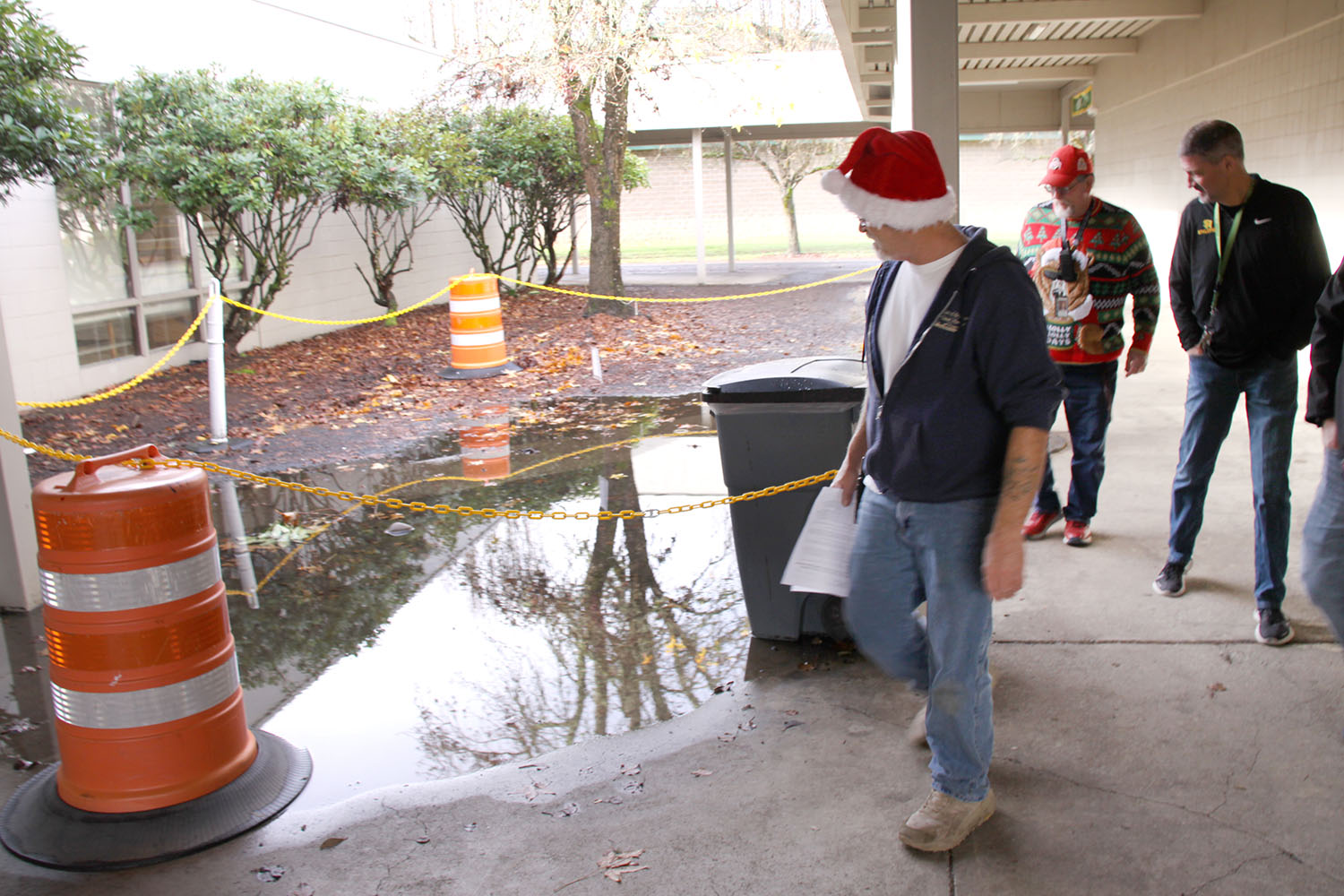
Huff and the others stood in the breezeway which runs along the east end of the “C” building and counted doorways that give students and the public easy access to classrooms from off campus.
Strong noted that the most of the current campus, built in the 1970s, is “very porous,” noting that there are more than 40 entrances in which students can exit and intruders can access the school buildings.
Principal Ralph Brown said his biggest concern, along with developing the school’s Career and Technical Education programs, is “safety.”
He said he spends a lot of time at the school early in the mornings and late at night.
“If I see somebody, I say, ‘What are you doing on campus? You need to be off campus.’
“There are lots of places to duck in. There are lots of places for kids to get lost. Supervision is really difficult, with all the places to hide. It’s been crazy. I’ve been here 11 years. We went somewhere with Darren (Schultz, the school’s head custodian,) and I had never been in that one spot.”
Standing in the breezeway, Huff counted 13 entryways to classrooms into which an intruder could easily walk from the outside, “and that’s just going down through right here,” he noted.
Strong added, looking over Huff’s shoulder: “And that’s not counting the two modular classrooms.”
Brown said one concern is that, with all the nooks and crannies on the old campus, a student could have a “medical issue” and staffers could be unable to locate the missing teen.
 “We have cameras, a lot of cameras, but having a place that’s more contained, it’s easier. You’d have better coverage. “
The ease of access from the outside is such that, one day, a motorcycle roared up onto the sidewalk through the breezeway between the auditorium and the main “C” high school building. The rider was dropping off his girlfriend, a student, Assistant Principal Luke Augsburger said.
“I can’t remember who was there, but they said, ‘Did I just see a motorcycle drive through campus?’ Of course, by the time we were able to catch up, that guy was gone and it’s like, ‘Don’t have your boyfriend drop you off.’ That was very sweet of him, but through the campus?”
He said multiple bicycles have been stolen from a rack next to the doorway at which the motorcycle commuter student was dropped off.
“I wish there wasn’t through traffic here, 24/7,” Huff said
Brown said one morning students walked in along with a barefoot stranger, who turned out to be “a homeless guy walking right through.”.
“The openness from the outside, we have people just coming in the door.”
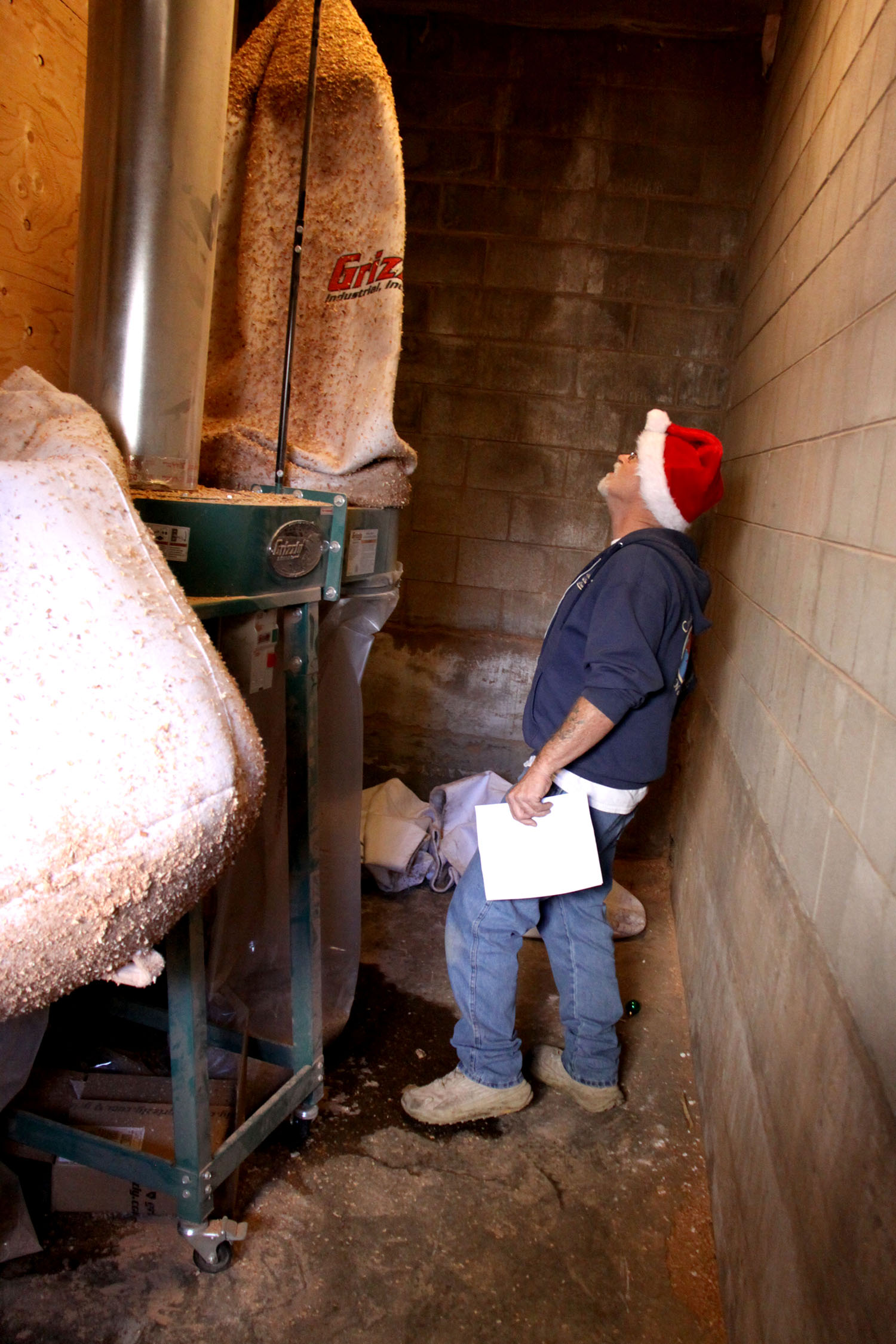
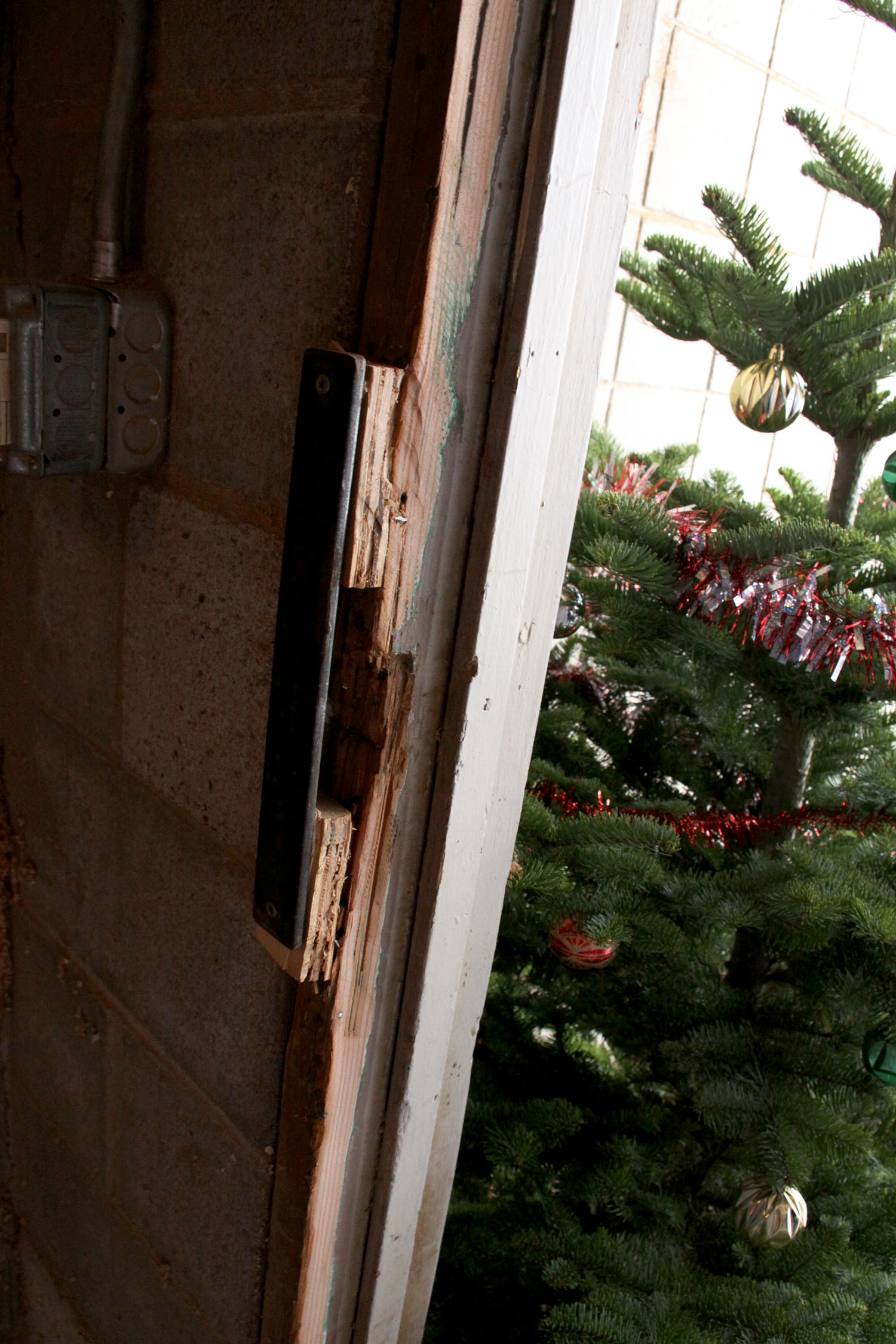
Earlier this fall, school officials discovered another homeless man who had popped open a loose door to bed down in a closet built to house an exhaust fan for the woodshop.
 The main high school building is also hard to negotiate for someone not familiar with it, Strong said.
“It’s like a maze,” he said. “How would you like to be a freshman on the first day, coming in the front door. You turn left, though you could turn right, then you turn right… It’s confusing.”
Strong and high school administrators emphasized the importance of having controlled egress and ingress for the campus, so students cannot simply leave the premises and then sneak back into class without having to check in at the main office.
High School History
The high school has undergone several expansions since the first portion of the modern campus was completed in the early 1940s. It has expanded westward over time, so the initial buildings what are now the music building and buildings used for CTE purposes.
Sweet Home Union High School was formed in 1912, from Sweet Home, Foster, Pleasant Valley, Moss Butte, Sunnyside, Liberty, Cascadia, Greenville and Cowling school districts, The New Era recounted in 2003.
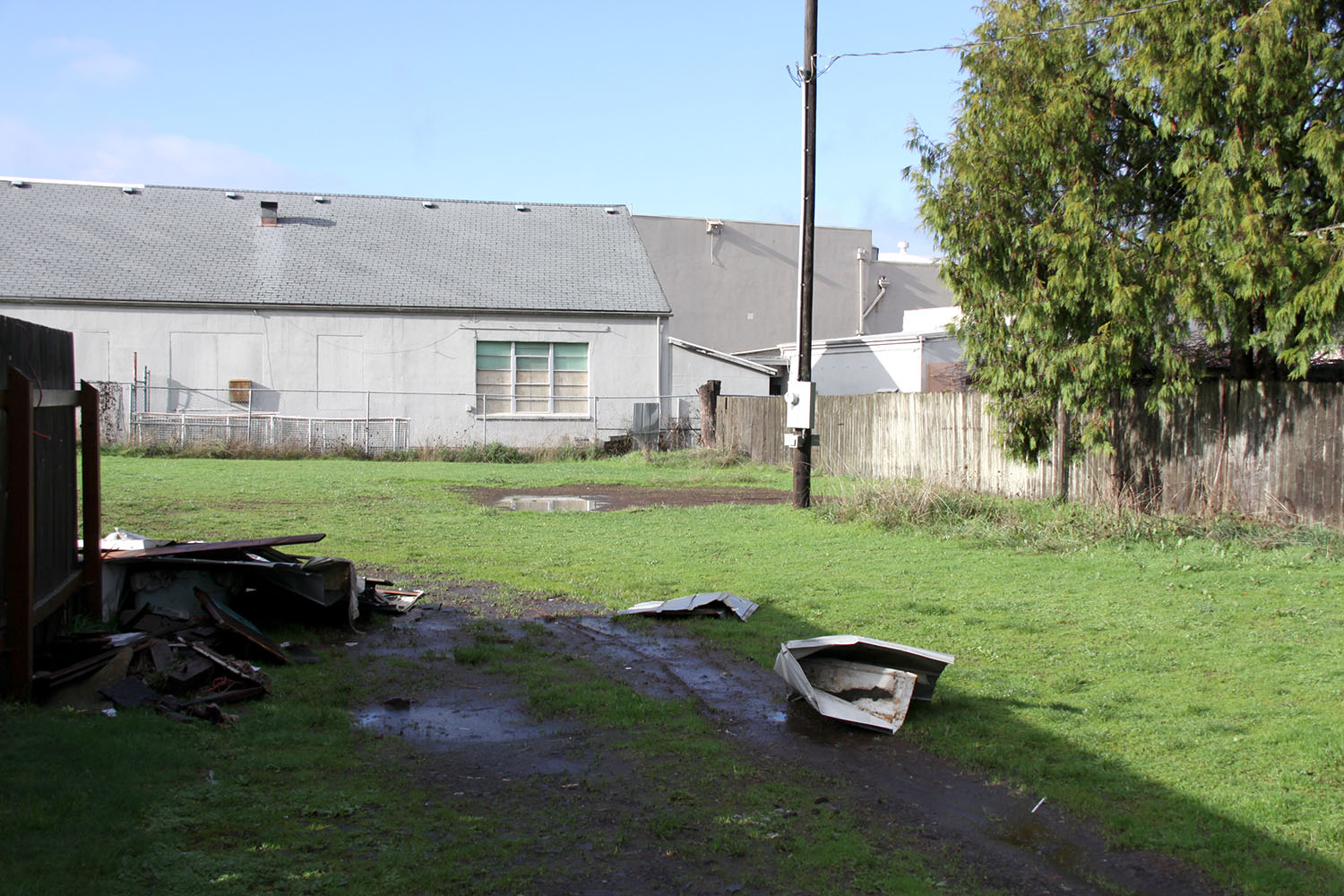 The first building was finished in 1914, housing 26 students and two teachers. It was expanded as the school expanded to more than 145 students in 1933. A new building was approved in 1934, and expansion continued through the 1940s – a boiler room, a library-study hall, more classrooms and a cafeteria. A gymnasium stood about where the current cafeteria is. The auditorium was completed in 1950.
The current “B” and “C” buildings were built in the 1970s, while the front section of the campus facing Long Street and the main gymnasium were constructed in 2003-04 after voters approved a $19 million bond.
Structural Issues
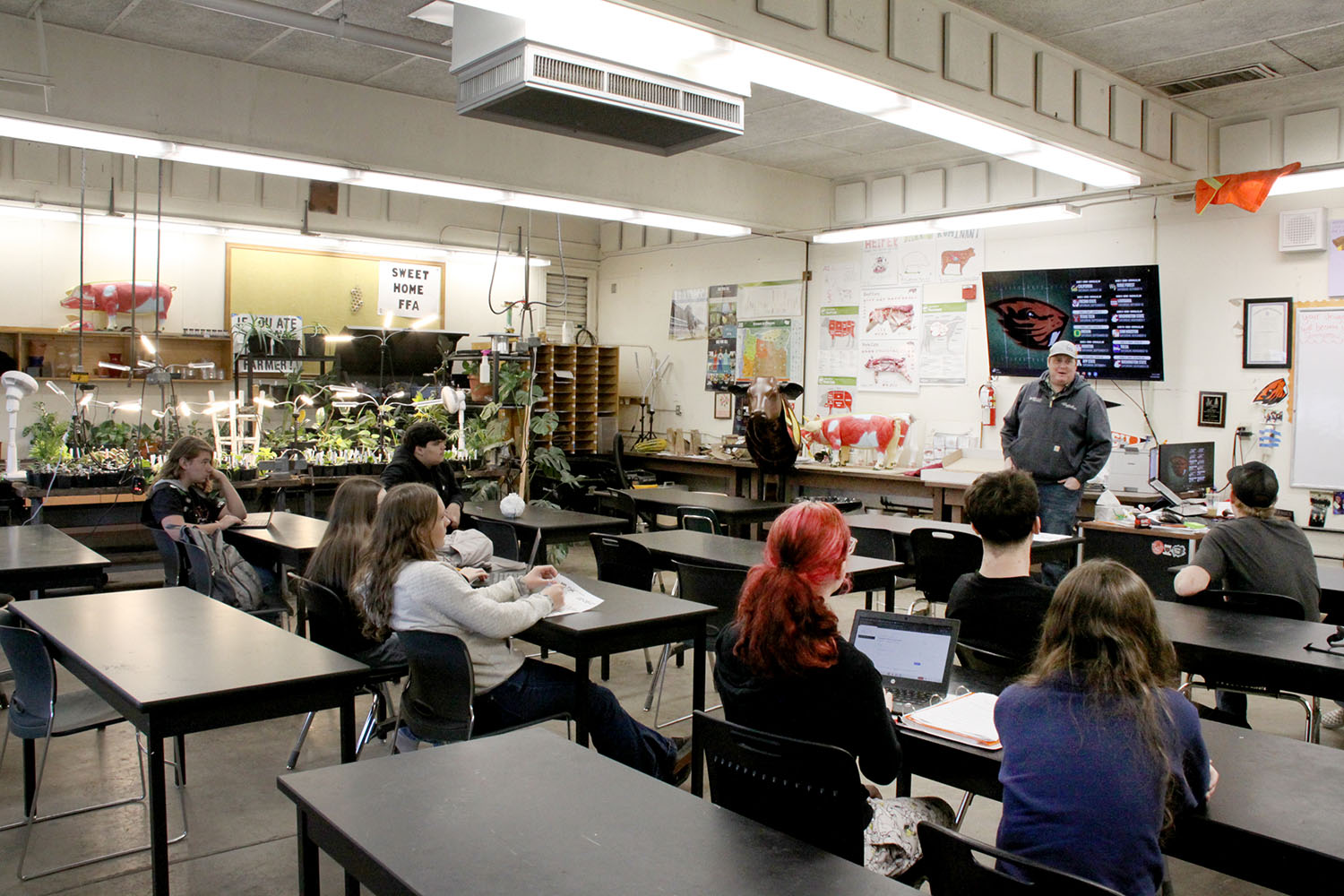
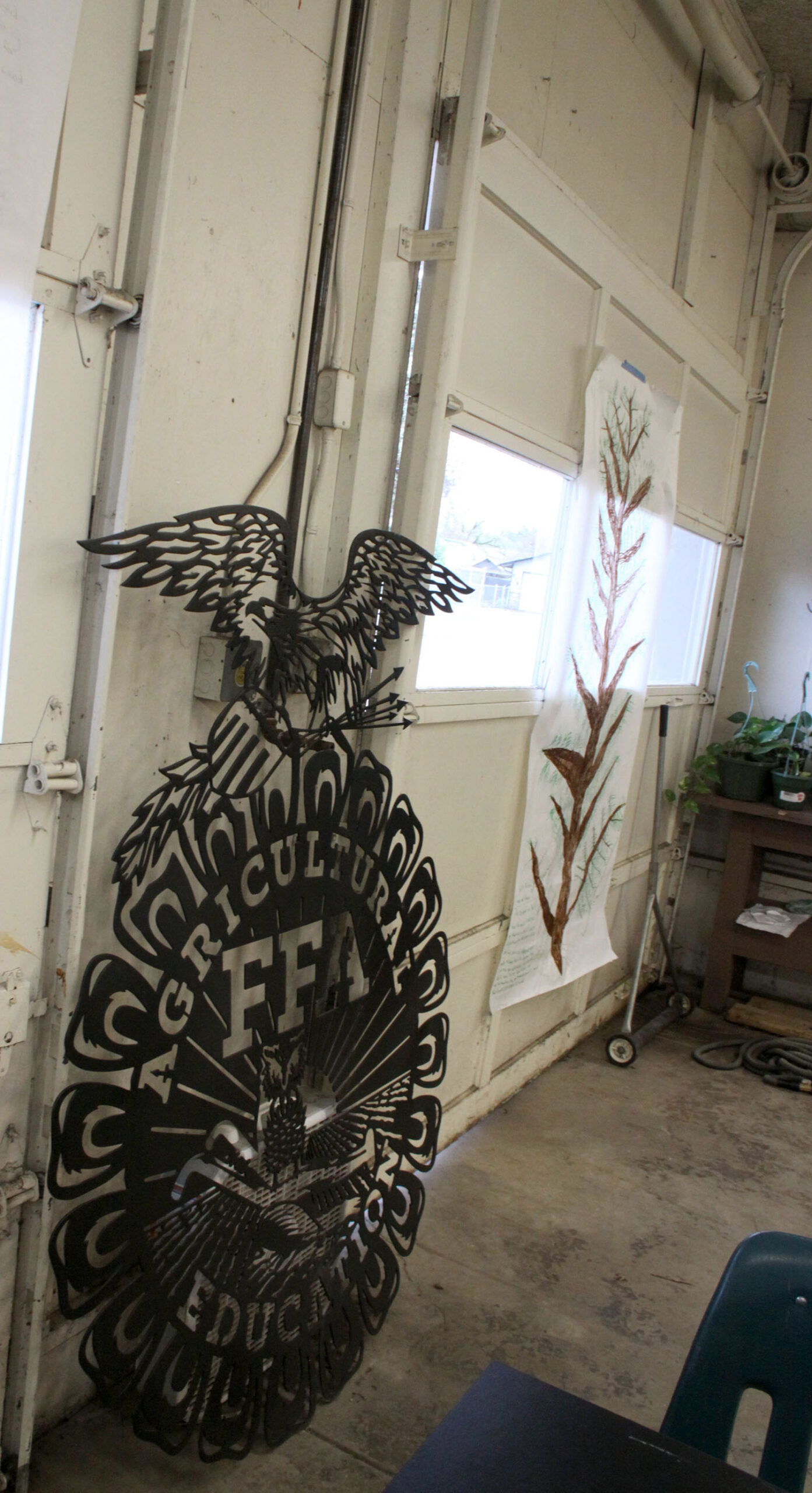
Some of the older high school buildings have reached the end of their functional lives or need significant improvement, Strong said, listing the woodshop, in which the concrete floor is buckling, and structures housing the auto shop and agricultural classrooms.
 “Our thought would be this building here would come out so we would have a new art classroom, a new agriculture classroom and a separate greenhouse,” he said, gesturing at the woodshop structure.
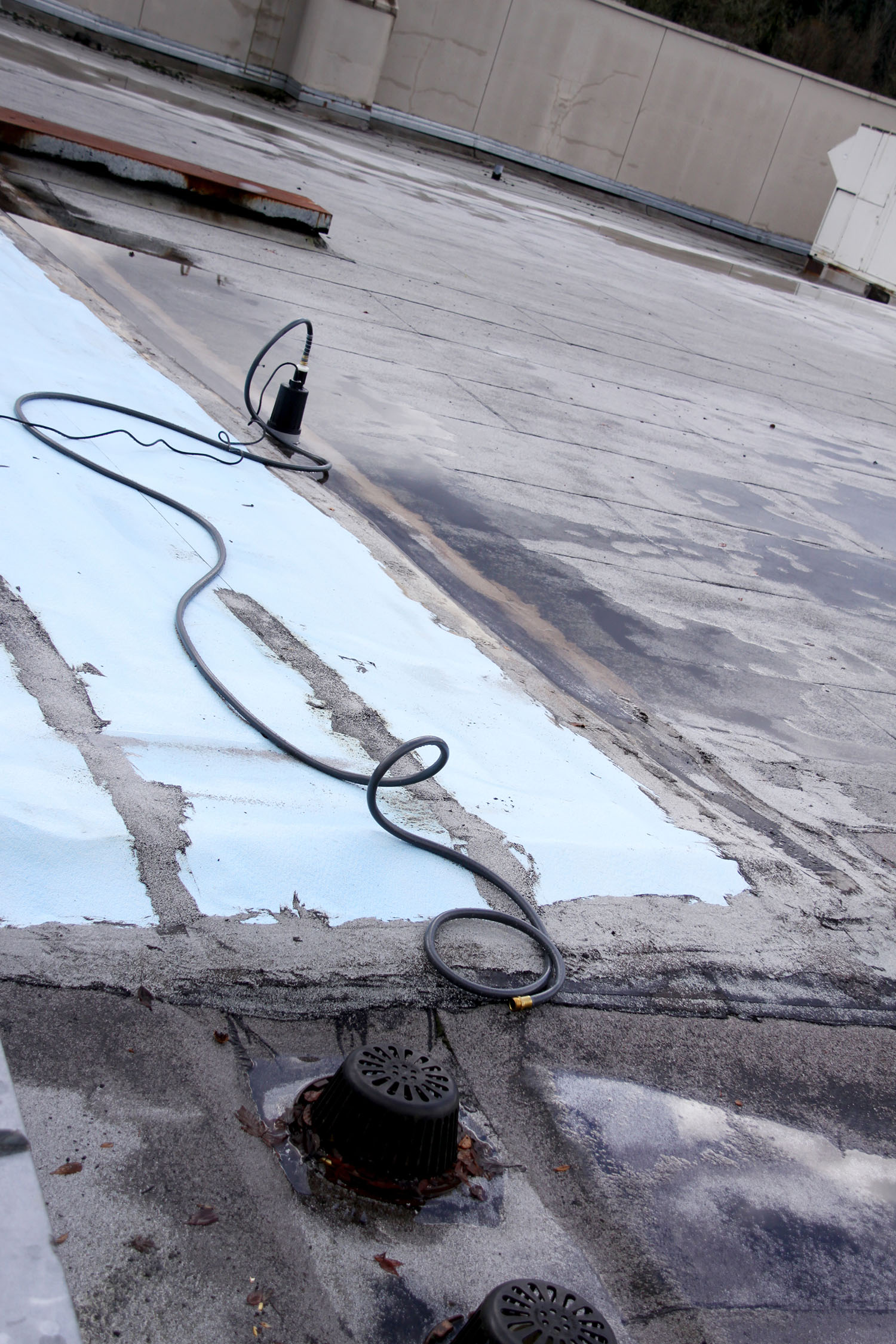
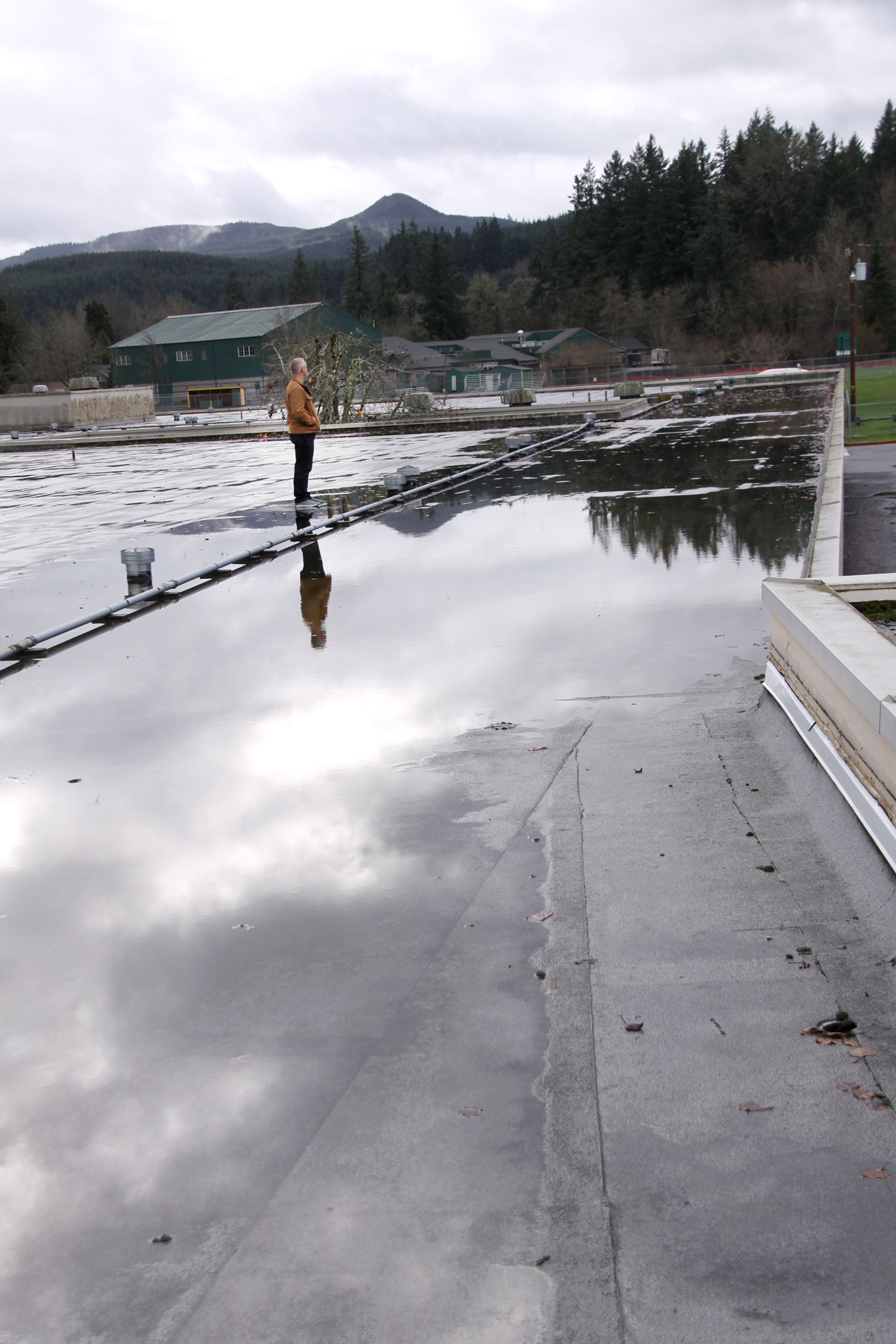
Another concern is the flat roofs over much of the older campus. Following the rainstorms earlier this month, a puddle several inches deep in places stretched the length of the breezeway along the west side of the “B” Building.
Strong noted that the flat roofs and breezeways were constructed “before campus security was a concern.”
“The thought was, we need classrooms for kids,” he said. “At that time, rather than thinking long-term durability. Our goal this time would be to provide a safe, secure campus for kids and we want to provide for durability so that what we build lasts for generations.”
 In a written report to School Board members in November, Strong listed desired improvements that include: weather-resistant roofs and classroom construction; eliminating “outdated” modular classrooms, removal of asbestos; improvements to CTE, music and physical education facilities; traffic safety improvements including a dedicated bus loop, and establishing a financial literacy lab for students.
OCSIM grants, along with other state funding, have allowed the district to make significant improvements to the Junior High and the elementary schools, while other nearby districts are struggling with buildings that needs significant improvements and voters that have not approved bond requests to make fixes.
Strong said a high priority is to make sure that the cost of any new construction would not exceed the current rate local property owners pay on the the district’s current $4 million bond levy, approved by voters in May of 2016 and set to be paid off in early 2029. If voters approve a new bond, he said, the goal is to make sure the rate would simply be would be extended at exactly the same amount residents pay now.
 He said that a big emphasis in any new construction will be creating facilities that the community as a whole can benefit from, and hearing from the community how needs should be met. .
“We definitely want to involve the community in our music and P.E. spaces,” he said. “We are talking about creating a P.E. field within a secure campus, so the question is how can that P.E. field benefit the community?
“All of that will be what we want community input on.”