


By Roberta Kern
At East Linn Museum, we’ve started looking in the “General History of Oregon,” written by Charles H. Carey, LLD and printed by Buford and Mort in 1971, to which we have referred in the past regarding the history of our area.
Actually, not much about our area is mentioned therein because our volume only goes up to the mid-1800s, but questions about Oregon’s years before then can be answered.
Our curiosity involved the way the United States and Great Britain had joint occupancy on the
northern border until the issue was decided in part because American settlers outnumbered
British ones living near the Fort Vancouver vicinity.
Fort Vancouver represented the Hudson’s Bay Company of Canada, but the Americans formed a local government at Champoeg and the border between Canada and America was set at 50° longitude by 40° latitude, not the 54° 40° on the map, as Americans had cried for with the slogan of “54°40° or Fight”, without the fight in 1846.
So why joint occupancy for the earlier 1800s? Because of, really, procrastination.
Following the Louisiana Purchase in 1803, the United States boundaries came into question. Spain still claimed the western areas of California, Texas, Colorado, New Mexico, and Arizona, for example. Russia had crept north from Alaska to the 54th parallel and in the southeast,
Spain continued to hold on to Florida, so a commission was set up to agree to borders and if
Napoleon could sell the Spanish Louisiana Purchase (obtained secretly by trading Italian
holdings to Spain for those in America) to Jefferson.
To help clarify this, President James Monroe’s Secretary of State John Quincy Adams stepped
into the fray. He aided the president by helping to compose the Monroe Doctrine, warning
European countries not to try to set up new colonies in the Americas where the Spanish were
losing their colonies to concepts of liberty, equality, and independence and going broke.
John Quincy Adams: Here was a name with resonance, but one we had not associated with Oregon history, and we were sidetracked.
As we know, John Quincy Adams was the son of our second President John Adams. The first father-and-son duo before the Bushes. He grew up with the founding of the country. His
mother Abigail had wanted the Constitution to give women the right to vote.
He’d spent many of his formative years in Europe, where his father was seeking recognition of the United States and hoping for loans from the French and Dutch.
He’d seen the Battle of Bunker Hill with his mother and knew Revolutionary leaders George Washington and Thomas Jefferson. He was educated and urbane and, in his photograph, he had the dour look of a New England conscience.
He lived up to this after his single term of office as president and served 11 years in
Congress as a representative from Massachusetts, dying in 1848 in the Speaker’s room after
collapsing on the House floor two days earlier.
As a representative he had argued against slavery to the point that he was censured and the subject was tabled and not to be spoken of.
He foresaw the coming of the war over slavery and had at one time represented a handful of his
Massachusetts constituents in threatening succession if the slavocracy of the South continued,
so the idea of succession in one way or another was already around in the 1840s.
It later led, some two decades later, to the uncivil Civil War, South versus North.
John Quincy Adams as president, inherited the vice-president from Hell in the form of General
Andrew Jackson, who despised John Quincy Adams because he had been one of three
candidates in the run-off of electoral votes which saw Adams victorious.
Jackson held that Adams had acted illegally.
That, as a runner-up, he gained the vice-presidency (which was how it worked in those days), satisfied Jackson not at all and he worked to replace John Quincy Adams by becoming our seventh president.
The difference between John Quincy Adams and Andrew Jackson is what side-tracked our
attention. Each represented a certain section of the country.
Adams was of the East Coast, with an eye toward Europe and internationalism, whereas Jackson was a westerner, with his vision formed by frontier experiences.
When Adams’ father, John Adams, had been president of the United States, and uncertain about whether holders of that office should be addressed as “your highness,” an observer remarked that John Adams qualified as “his rotundity.”

John Quincy Adams had known General George Washington. Andrew Jackson, as a general,
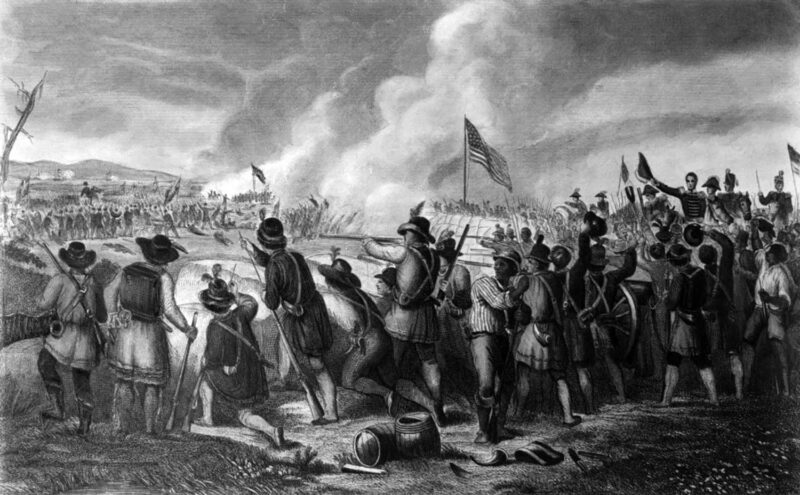
had won the battle of New Orleans during the War of 1812, not knowing a treaty ending the war
had just been decided at Ghent by John Quincy Adams and other negotiators.
Andrew Jackson won southeastern battles against Creeks and Seminoles and drew attention to the weakness of the Spanish and their hold on that area, facilitating the United States’ securing of Florida.
Andew Jackson enjoyed western amusements, such as cock fighting, horse racing, and an
occasional duel.
John Quincy Adams got up early every morning to write in his diary and, as president, he also liked to swim around dawn in the Potomac. Once, his boat sank, carrying with it most of his clothes and he had to make his way back to the presidential residence cloaked mainly in embarrassment!
Jackson was flamboyant, a self-made man who counted slaves among his wealth.
Adams was taught to respect duty and diligence.
Each believed in his vision of democracy, equality, and liberty and the United States.
We can go on thinking of the differences between John Quincy Adams and Andrew Jackson,
but our nation has always been one of differences and mainly, respect.
One thing both men had in common during their political careers was the westward expansion by the American populace.
As the issue of slavery began to increasingly take prominence, should it be allowed?
In this, John Quincy Adams was on one side and Andrew Jackson was on the other, slavery and anti-slavery respectively, but neither former president would live to see the outcome of the Civil War.
So, did John Quincy Adams play a big role in settling troubles with the U.S. movement into
Oregon Country? Perhaps not, but if we want an American hero, in his quiet way he deserves
to be listed.
Jackson, we don’t worry about! As “bigger than life,” he gains much more notoriety than John
Quincy Adams maybe because he’s often depicted in a military uniform.
He remains a folk hero, popularly called “Old Hickory.” He promoted the frontier and American expansion. Much has been written about him.
Despite h is long career as an up-holder of the Constitution, less has been noted about John Quincy Adams.
But then, the art of a diplomat is to be heard…not seen.