

From racing horses to making donuts, Mollie’s Bakery owner enjoys life

Sean C. Morgan

Len Street’s greeting is a big grin and a box of donuts.

Ask him how he’s doing, and he’ll tell you if he was any better, he’d be half to be twins, no matter how bad his day is. He has stories for a couple of lifetimes and enough to fill a couple of books.

He doesn’t just approach life. He attacks it with an optimism that has led him to the top of horse racing and all over Canada and the United States.

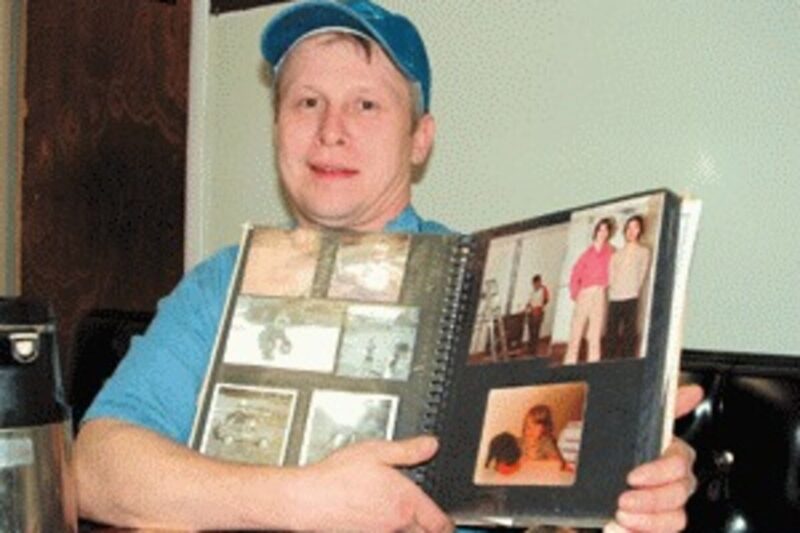
Street purchased Mollie’s Bakery last summer and is continuing Mollie’s tradition of making donuts from scratch and keeping true early birds fed at all hours of the early morning.

Street followed a winding path to Sweet Home, a place he discovered in the 1980s. He knew then he would live here.

Street, the baby of 12 children, grew up in British Columbia, and he grew up fast. While living with his father in Quesnel, B.C., he abandoned the seventh grade to seek his fortune.

All of his brothers and sisters had gone north with the Canadian oil boom in the late 1970s. Street didn’t want to be left out of the opportunity and could think of no good reason to continue going to school.

“It just seemed like everyone was up north working and making money,” Street said. “I was on the way to school. “I didn’t know what I wanted to do. I just wanted to make money and not go back to school. I dumped my duffel bag out and went north. There was just so much out there, and I wanted to see it.

He went home, packed a change of clothes, grabbed his “mummy” bag and hitchhiked north past the sawmill where his father worked to Ft. St. John.

Ft. St. John is just south of the Yukon Territory by Canadian reckoning, which means it is a couple of hundred miles from the border.

“When I got to Ft. St. John, I had a whole bunch of family up there,” Street said. “I didn’t want to go back to school.”

So he set out to avoid his family members. He found a Husky truck stop, went to a vacant lot next door and dug out a small snow cave where he slept for the next couple of weeks, then he got a job at the Husky washing dishes.

Sleeping in the snow wasn’t too cold, Street said. The snow acts as an insulator and is not a problem as long as a person doesn’t dig down to the ground, which sucks out the heat.

A group of Chinese people who ran a couple restaurants came into the truck stop regularly and offered a job to Street. They offered $1,200 at first.

“I kind of told them, no, I had a job,” Street said. Then they offered room and board. He got a tiny room in a four- or five-bedroom house that had been converted into a 20- to 30-bedroom house shared by members of the Chinese family.

He landed a second job with a customer after he heard him talking about race horses. Street’s family had a background in horse racing, and it was in his blood too. He talked the man into letting him work for him. He started cleaning stalls, then he talked the man into letting him get on horses. Soon he was breaking horses and talked his way to the race track.

That’s when he learned that his own sister and her husband were the man’s horse trainers.

“I bolted,” Street said. “They saw me, and I just disappeared.”

Street bought a truck and headed east, his sights on Toronto. Having been there to work with his brother for a short time, he didn’t realize just how long the drive was. He was out of money in northeast Alberta.

In Hannah, Alberta, he obviously was not old enough to drink alcohol, but a bar was the only place open.

“I stopped into the bar and asked if I could get a drink of water,” Street said. “I heard my name from across the bar, and it was a neighbor from my home town.”

He asked what Street was doing, and he told him. He ended up with a job moving 10,000 bales of hay from one pasture to another.

“These bales weighed nearly as much as me,” Street said, and plenty of folks had a good laugh about it.

He wintered over in Hannah. By spring he had enough cash to continue traveling to Toronto.

“I went to the race track, walked on there like I owned it,” Street said. He got a job with King Haven Farms, the largest in Canada, cleaning stalls. He also got work at an office supply warehouse. His job with King Haven turned into galloping (exercising) the horses and then training them.

Street said he went for King Haven based on the horse racing theory that “you’re only as good as the horses you’re on and the people you’re around,” and King Haven was the best.

King Haven later sent him to work in Florida, with the idea of having him begin racing as its “bug boy,” slang for a rookie jockey, when he returned later to Toronto.

Street got his first taste of racing on a pitstop in Vancouver, B.C., on the way to Florida. His first race was on a “bush” track of B track in British Columbia.

“You show up,” Street said. “If you know what you’re doing, you get a shot. If not, you’re gone.”

He worked part of a year in Florida, all the while sending his money back to his girlfriend in British Columbia. After his tour in Florida was done, he returned to British Columbia.

“I flew into Kelowna, it was about 10 degrees, and there was nobody there to pick me up,” Street said.

He did have one check on him, and he used a taxi to where his girlfriend lived, some 70 to 80 miles away.

“She didn’t live there any more,” Street said. “My truck wasn’t there. My money wasn’t there.”

He found a Ford pickup for $300 and headed back to Ft. St. John and drove logging truck in Dawson Creek until spring.

He didn’t call King Haven out of pride, Street said. “I never asked anybody for anything in my life.”

He was supposed to be back in Toronto for his rookie season. Instead he started racing the bush tracks in British Columbia.

“I started riding and never made it back to Toronto,” Street said. His career there eventually led him to a career racing on the big A tracks, and he always kept that mixed up with the B tracks. While there, he worked on an oil drilling rig on the Beaufort Sea north of Canada during the winters.

By the early 1980s, he was racing in British Columbia and Alberta five to 10 times a day.

“I never wanted fame or recognition,” Street said. “I just wanted the self-satisfaction. I wanted to see how good I was in my own mind. I didn’t care what the world thought.”

But the world saw a rider reach the top rank as leading rider three times in races won or money earned.

The best jockeys are in California though, and Street headed there in 1986.

“I did extremely well,” Street said. “For the first year and a half, I had no work permit to ride.”

He fed himself galloping horses for other riders. When he received his professional athlete visa, he began racing and got married.

She liked the fame and fortune, fur coats and martinis and like her, racing in California “wasn’t for fun. it was about money and show.”

He decided to quit, and she told him she wanted a divorce. He attended realty school with Century 21 and worked at Radio Shack then left California.

The track finally called him back, and he was racing again under a vow to race on as many different tracks as he could.

In 1988, while in Florida, a banker in Washington called and asked him to come race a horse for him. He offered him a good chunk of money to race the horse win, lose or draw. Street made it to the race with just two hours to spare.

He ended up racing around the Northwest. He lived in Portland and raced often at Portland Meadows.

In 1989, Street became the first jockey to earn his GED under a new program to educate America’s race tracks. Gov. Neal Goldschmidt presented him with his GED.

Street met his wife, Michelle, at the race track, and they spent time together while she tutored him in algebra for his GED.

“We kind of knew we’d be together,” Street said. They were married in 1990 at Holley Church.

He finally quit racing in the early 1990s after reaching the top 10 in rankings at one point, settling in Brownsville and working for DuBois Chemical and attending Linn-Benton Community College. Street and his wife later transferred to Spokane where he continued working for DuBois then started a fence business. During winters, he drove truck for a grocery store.

“We loved it here,” Street said. “We tried to buy land here before.”

Street remembered the area after being rerouted through Lebanon and Brownsville on his way to California. Interstate Five was clogged with a gigantic car crash that resulted from field burning obscuring the freeway.

That’s when he knew he would end up living in the area, he said. After his mother died in 2001, they packed up and moved to Crawfordsville.

Street said he looked at Mollie’s for a year and a half before deciding to buy it.

Relatives kept telling him “that place has you written all over it,” Street said. One day, he went down to Mollie’s and banged on the door.

“Mollie wasn’t going to open the door,” Street said, but she relented. “In 10 minutes talking to Mollie, I fell in love with Mollie and the bakery. I absolutely love it. I wouldn’t trade it for anything in the world. I see her dream for the place. She’s like my second mum.”

The dining room area is getting a facelift. New booths are in and ready to be bolted down. The walls are decorated with photos and paintings of horses and jockeys, some famous and some obscure, most of them signed.

“I saw it advertised as an institution forever, a cliché,” Street said. “But I realized it is an institution. It’s an honor. I don’t feel I was the lucky one to buy it. I feel like she chose me for whatever reason.”

Michelle works constantly at Mollie’s too, Street said. “Now she’s as much in love with it as I am.”

The best part of running the donut shop is to see the look in customers’ faces, to see them happy when they leave. Street also loves the heritage and history of the shop and the fact that it’s one of the last places that still produces fresh donuts from scratch every day.

The Streets have four children, Jeremy, 17; Nicky, 13; Tyler, eight; and Kaitlyn, six.

Total
0
Share