

Jamboree crowds top 8,000 per day

Sean C. Morgan

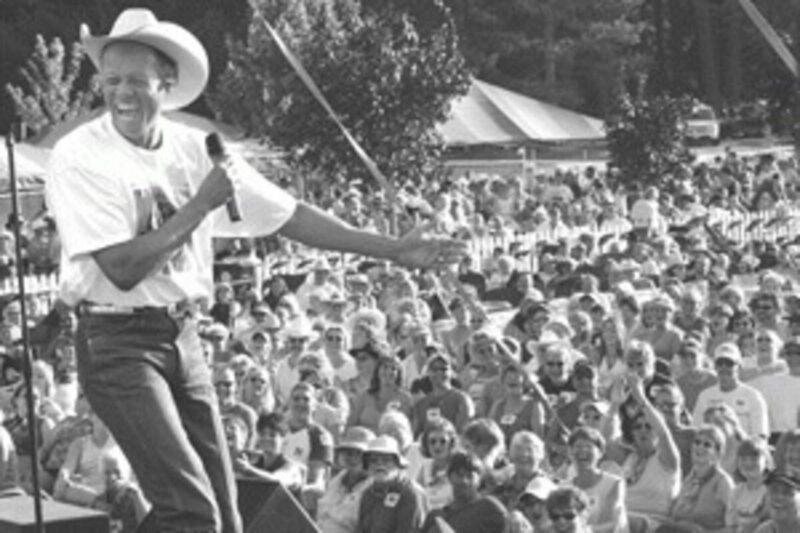
Oregon Jamboree attendance was up around 26,000 to 27,000 for the weekend, according to Event Manager Peter LaPonte.

At 8,000 to 9,000 per day, “I think we had more attendance this year than last year,” LaPonte said. Last year, the big day was Friday with Alan Jackson with a lighter crowd on Saturday and even fewer on Sunday.

The higher numbers, marking probably the largest Jamboree audience of its 12 years, “showed in all of our concessions,” LaPonte said. “I think the Kiwanis and Rotary probably had their best year ever.”

All of the Jamboree’s concessions, including beer and pop, sold better than ever during this year’s event, July 30 to Aug. 1.

“Knowing our lineup wasn’t going to be an Alan Jackson, I went out and started working promotional agreements,” LaPonte said. That meant more complimentary tickets in exchange for promotion efforts throughout Oregon and Washington.

Although ticket revenues were down slightly from last year, the Jamboree had more people out and more promotions, LaPonte said, and that showed in concessions.

“I put a lot more time into promotion and sponsorships this year,” LaPonte said. The event had several brand new major sponsors.

Advance sales may set a record, but it is too early to tell, LaPonte said. The sales don’t close until Aug. 20.

“I can tell you, we’re going to have a really good profitable year,” LaPonte said, but it’s too early to tell how large the profit will be for sure. Last year, the Jamboree hit the $200,000 mark, its largest profit ever. LaPonte does not know whether the Jamboree will exceed that total this year.

In any case, it is the fifth consecutive profitable year for the Jamboree, LaPonte said. Those profits have ranged from just under $100,000 to $200,000.

Jamboree profits are used by the Sweet Home Economic Development Group for local economic development efforts, and a portion is donated to the Sweet Home Community Foundation.

This year’s show included Clint Black, Neal McCoy, Clay Walker, Pat Green, Pam Tillis, Brad Paisley, Blue County and more. Most of the shows went without a hitch, but the much anticipated Walker ran into monitor problems.

Both the audience and Walker had hoped for a repeat of his 2000 performance, some two and a half hours long, LaPonte said. That’s why Walker canceled another date to take the Jamboree date. Walker’s spontaneous show in 2000 had people talking. Those who hadn’t seen him were looking forward to what arguably may have been one of the top shows in Jamboree history.

When his sound system went out, it disappointed him and the audience, LaPonte said. Suggestion cards shows a belief the problem was with the Jamboree sound system when it was actually a problem with Walker’s equipment.

“It was disappointing for everybody, but unfortunately, it was one of those things the festival didn’t have any control over,” LaPonte said. Though a decent show, Walker was tired and had been fighting a variety of problems, including the bus breaking down recently. “It just wasn’t in the cards for them to come back and do their best performance. Because of that, Neal McCoy stole the show for Saturday. I thought he might have stolen it for the whole weekend.”

LaPonte thought McCoy, Collin Raye, Brad Paisley and Clint Black all did a good job.

Black delivered some of the best sound the Jamboree has ever had, LaPonte said, and the audience noticed.

“It was a joy to walk around that festival and hear that quality of sound reproduction,” LaPonte said. Black has one of the best sound engineers in the business.

“I think overall, people were satisfied,” LaPonte said. “The festival keeps getting more and more popular.”

The new video screens helped take it to a new level without significantly boosting ticket prices, LaPonte said. Though not the biggest, the Jamboree had the best equipment available, and that made concertgoers feel like they were getting value for their money.

The screens offered the opportunity to add value to tickets with interviews and programming between shows, LaPonte said. That added value “is what we need to offer the public in this business world.”

That buys fan loyalty, LaPonte said, and they tell their friends, who begin attending too.

He would like to start selling the show out, LaPonte said. Right now, the show is just shy of reaching capacity, running 80 to 90 percent. Reaching potentially up to 10,000 persons per day on the high school site and “at that point in time, that’s the highest level of success we can achieve.”

Total
0
Share