
Sean C. Morgan
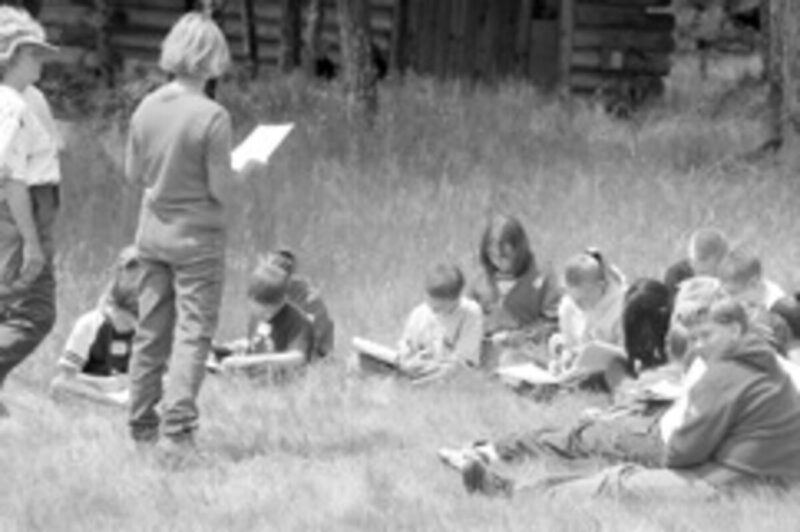
Sweet Home and Lebanon students spent time last week at Happy Valley Tree Farm learning about how forests are managed.
The field trips, held on Wednesday and Thursday, were the second part of a three-part classroom project at the schools.
Happy Valley Tree Farm, located off Bellinger Scale Road, is owned by Bert and Betty Udell.
At school, the students began the project, Sue Bowers of Forests Today and Forever of Springfield said. Bowers and Cascade Timber Consulting’s Howard Dew organized the project with volunteer help.
At school, classrooms divided into groups of four. Those groups of four “siblings” learn that they have inherited 200 acres of forestland. They spent classroom time learning about the components of forest management, including harvesting, recreation, wildlife and soils and water protection. Each student in each group tends to favor one of the four components of management.
Last week, they visited the tree farm to learn directly from workers in forest-related fields about forest management issues.
“They take the information they’ve gathered today back to school,” Bowers said. “In family groups, they will hammer out a compromise management plan.”
The curriculum calls for a five-year management plan, and all individuals in the groups must agree with the final plan.
As they develop their management plan, the students will talk about how each area impacts the others, for example, how recreation development might impact soil and water protection or harvesting.
The program included 150 students on Wednesday and 100 on Thursday. All of them are from sixth-grade classes in Lebanon and Sweet Home. Albany schools have participated in the program before.
“It teaches them about natural resources,” District 55 Board Secretary Milt Moran of Cascade Timber Consulting said. During the program, he taught soil and water protection, stream buffering and keeping clear and clean water.
“There’s nothing more important than soil and water for us all,” Moran said. “If you don’t protect it, you get dirty water.”
This affects fish as well as the drinking water everyone needs to survive, Moran said. They learn how harvesting and the rate at which they harvest affects the other parts of a forest.
“We’ve given them the tools to make the right decisions,” Moran said. “They know they’ll have to something because they have to pay taxes.”
The students cannot simply do nothing with the land in this program. They must make the forest earn some income, so they can cover that ongoing expense.
The students apply a variety of concepts from math and science to the project, Dew said. They learn to manage the forest, perhaps becoming multi-millionaires. They aim for “sustained yield” management to show how much volume they can take from the forest each year. “They usually graphically depict where they’ll put trails and roads.”
This program started about 10 years ago, Dew said. Others were in place before it; but those programs often just focused on providing information to the students. Often all they remember is the fire truck demonstration from those programs.
This program provides information and skills that “stick with them,” Dew said.