





Joanne West
For The New Era
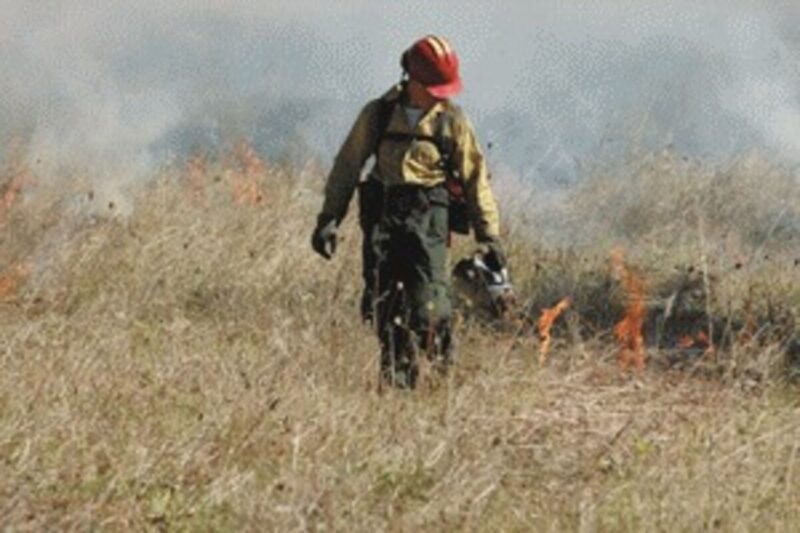
A controlled burn by the Sweet Home Ranger District of Camas Prairie went off without a hitch Tuesday, Sept. 20.
The goal of the Camas Prairie Restoration Project is to promote camas production through restoration of a degraded prairie wetland. Burning the prairie promotes production of camas and other native species while reducing rodent populations. It also helps to keep Oregon ash from encroaching on the prairie.
Camas is a member of the lily family and the camas bulb was traditionally used as a major food source for indigenous people of Oregon’s Willamette Valley. The bulbs from the camas plant were baked in pit ovens for two to three days. The roasting process sweetened the camas and increased its digestibility. After roasting, the bulbs were either eaten whole or pressed into cakes and dried in the sun. The cakes were stored or traded and later ground into mash and used in a variety of food staples.
This is the fourth time the prairie has been burned since 1998. About a month after the burn, Sweet Home Ranger District Botanist Alice Smith, other Forest Service employees, and volunteers will plant camas seed that was collected during the early summer. When the project began there were 7.4 flowering plants per square meter. This summer there were 19.2 per square meter, which is an increase of 260 percent.
The project involves many partners including BLM Eugene District, Confederated Tribes of the Grand Ronde, Confederated Tribes of the Siletz Indians, private contractors, Oregon State University and Lane Community College.
Twelve students of the University of Oregon’s Fire as a Tool for Landscape Designers, Planners and Managers class and their professor observed the burn along with Grand Ronde Tribe members and Forest Service natural resource specialists.
For more information about the Camas Prairie Restoration project contact Alice Smith, Sweet Home Ranger District botanist, at 367-9215.