


Sean C. Morgan
While cities around the Willamette Valley have had to deal with a number of reports of counterfeit money recently, Sweet Home has had only a single counterfeit bill reported.
A counterfeit $20 bill was turned over the U.S. Secret Service recently, Ron Wampole, resident agent in charge, said.
Sweet Home Police Department responded to a call two weeks ago to A where a suspicious bill turned out to be legitimate.
“If anyone comes across a bill that they think is suspicious, immediately discontinue handling it,” Police Chief Bob Burford said. The bill should be put in a plastic bag to protect latent fingerprints and police called.
“We tell anybody that gets a counterfeit bill to report it to the police,” Wampole said. It may also be taken to a bank. Counterfeit money in Oregon is then sent to the Secret Service office in Portland.
“We don’t get involved in the cases unless they’re pretty big,” Wampole said. If the case is just one or two bills, local police and the local district attorney will handle it, though the Secret Service offers its assistance to local departments. “We try to assist the local police as much as we can.”
“As far as Sweet Home, we haven’t had much of a problem in Sweet Home,” Wampole said. Most of the problem in Oregon lies along the Interstate Five corridor, where counterfeiters stop into stores while passing through. “That’s probably why Sweet Home doesn’t have as much.”
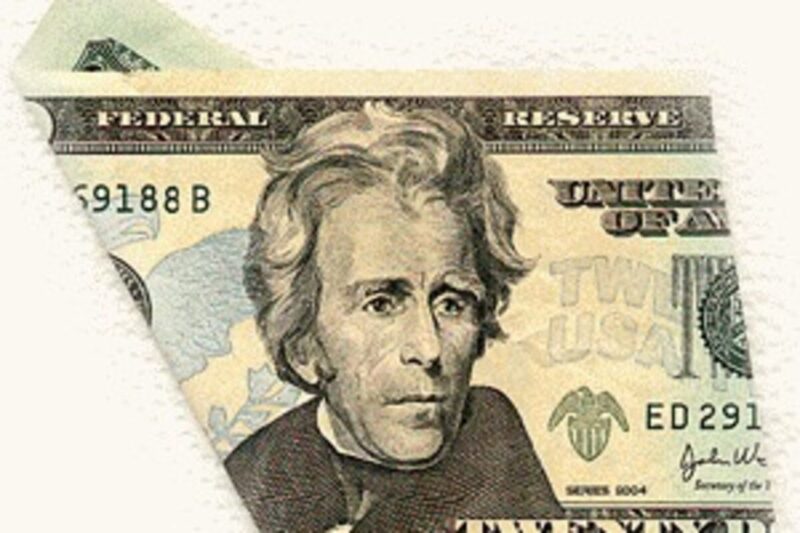
When taking a bill, most of the time the first thing to look for is the portrait, Wampole said. The portrait in a counterfeit bill is usually not as “three-dimensional” as the real thing.
Additional security features include a watermark of the president’s picture on the right side of the bill. Counterfeit money usually does not have the watermark.
On the left side of the bill is a strip embedded in the paper. The denomination of the bill is printed on the strip. Most legitimate bills will have the strip.
Genuine bills also have red and blue fibers in the paper. Counterfeiters often will try to simulate it by writing blue and red marks on the paper.
A special pen used to detect counterfeit bills is not always effective. The pen leaves a mark that turns black against some counterfeit money. Counterfeiters often treat the paper they use to counteract the pen.
If the average person looks at these things in a bill, “they’ll usually detect a counterfeit,” Wampole said. Overall, there is very little counterfeit money, about one bill in 10,000.
Most counterfeit money is made using computer, scanner and printer, Wampole said. “The quality’s pretty poor when you make it that way.”
The higher quality counterfeit money is made with an offset printer.
The Portland Secret Service office receives probably about $5,000 in counterfeit money each week. Most common are $20 bills followed by $100 bills, and agents see a few $5 bills trickle in. Most of the time, counterfeit $1 bills were made by kids and used in change machines.
Thew new $20 bills are being counterfeited now, but they are even more difficult to counterfeit, Wampole said. Still people are passing them, and people are taking them.
“The people taking them jut aren’t looking for the security features,” Wampole said.
For more information about counterfeit money and security features in genuine money, persons can visit http://www.secretservice.gov on the web.