


Sean C. Morgan
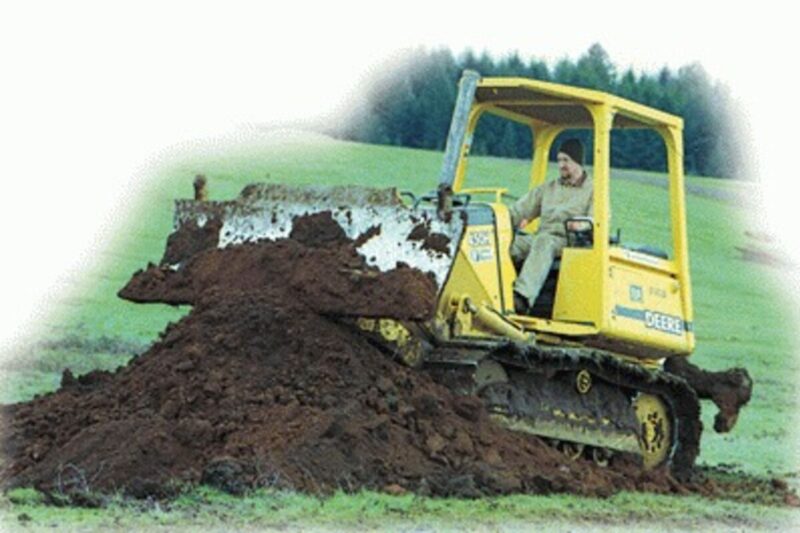
The South Santiam Four-Wheelers Association began preparing its annual mud festival site Saturday morning.
The fourth annual Mountain Mud Festival is planned for March 6. Tickets go on sale on Feb. 7 by phone through the Oregon Jamboree office, which is adding more staff and lines to handle the volume.
The event sells out within hours of when tickets go on sale. A total of 2,500 persons attend the event each year with somewhere between 1,100 and 1,300 rigs.
The Mountain Mud Festival is the successor to the Foster Mud Flat races, which were canceled by the Corps of Engineers four years ago following some 30 years of fun in the mud on the Foster lake bed. Following the cancellation, Norma and the late Roy Johnson opened up their Berlin Road pasture to the association.
To get ready for the event, volunteers with the club begin by digging holes and opening up key areas to collect rain water, event organizer Derrick Wodtli said. The mud festival is held on top of a rock, so it doesn’t hold water too well.
“Right now, anyone can drive across it,” Wodtli said. After volunteers break up the soil and dig holes, “it’ll suck up the water then.”
Volunteers must prepare the festival grounds each year because they fill in holes and smooth out the ground following each event.
Last year, “it rained really hard the day before and a little bit early in the morning, and that helped a lot with the water,” Wodtli said. “We had a lot of people that were really happy with how muddy and how slick everything was.?
“We might try to do a few different mudholes again. We’re considering remapping the obstacle course.”
Two years ago, the obstacle course drivers drove the obstacle course for speed and time, Wodtli said. Last year was so wet and slick, with deeper holes and taller hills, “it was a challenge for everyone just to get around the course. We want to make something everyone can get around but have a lot of fun doing it.”
At some point or other, the entire club, about 50 members, is involved in the event, whether preparing for it or staffing the event itself.
After the event, volunteers help repair the fields and spread new grass, Wodtli said, but they don’t stop there. They have also helped rebuild fence.
Tickets are $20. The Jamboree receives $4 per ticket for handling. The remainder is used to hire security, cover sanitation costs and help repair the fields.
The event attracts national attention each year, and visitors come from all over the Northwest and the nation. One couple travels from the east coast every year for the event.