




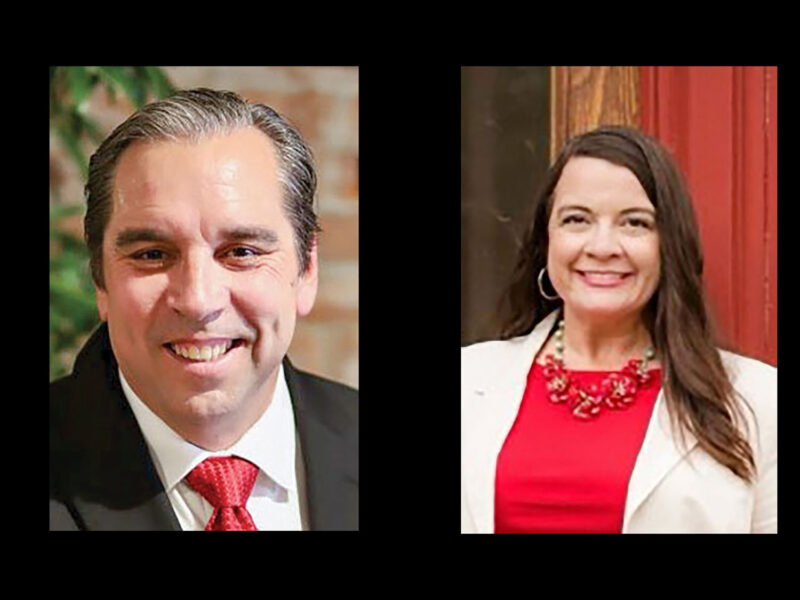
Republican Candidates for State House District 11
Contact: [email protected]
Family: Shellie Jackola, spouse
How long have you resided in the district? 55 Years
Education: Oregon State University, bachelor of science in agricultural science; U.S. Army, Sergeant Major Academy; Lebanon Union High School
Professional Background/Work Experience: Director – Special Projects, Albany & Eastern Railroad Company; Vice President, Albany & Eastern Railroad Company; Vice President, Rick Franklin Corporation; Owner, J.A. Trucking; Command Sergeant Major, U.S. Army and Oregon Army National Guard
Political Experience/Affiliations: Mayor, City of Lebanon
Angelita ‘Angel’ Sanchez, 46, of Sweet Home
Contact: [email protected]
Family: Three adult children, daughter of Joe and Renita (Sanchez) Cohen.
How long have you resided in the district? I was born and raised in Oregon. I’m fourth-generation Sweet Home, and seventh-generation in district.
Education: Linn Benton Community College
Professional Background/Work Experience: For the last 10 years, I’ve been a small business owner. I have my CCB license, certified residential and commercial. I’m a CDL license holder and truck driver. I’m also a public servant. Most recently, I worked last summer as a wildland firefighter. For the last five years I have been serving as a Sweet Home city councilor and I’m also a legislative assistant in the Oregon Senate.
Political Experience/Affiliations: Lifelong Republican. I have been elected to many leadership roles within the Republican Party: vice chair of Linn County Republicans, vice chair of Oregon Republican Party CD 5 and chair of Oregon Republican Party Election committee. I was elected to represent Oregon Republicans at the RNC and one of eight presidential electors. I am a founding member and spokesperson of Timber Unity, where I helped lead the fight against cap-and-trade. I serve on the Sweet Home City Council and have been actively involved in state-level policy through my work in the Legislature and grassroots advocacy. Additionally, I led the opposition against Statewide Rank Choice voting and defeated it. I am your local Linn County plaintiff in the lawsuits for the No Gas Tax Referendum. I am also a local captain for The No Tax Clawback referendum. I am a member of various local Chambers of Commerce, Oregon Women for Agriculture, Association of Oregon Loggers, and the NRA.
Other Community Involvement/Affiliations: One of my favorite things is gleaning. I have been harvesting produce that would otherwise go to waste, with an organization called Salem Harvest. We donate what we harvest to local food banks.
House District 11 Seat Questions and Answers
-
Why do you want to be our state representative?
Ken Jackola: As the mayor of Lebanon, I quickly learned our legislative body in Salem did not understand how their policies affected cities.
I want to change that! By providing a rural perspective during the policy-making process, I will be able to craft policies which represent our district and our way of life.
Linn County is NOT Portland, Eugene or Bend. We believe in self-determination for our citizens and communities. I will protect our rural way of life and the very things that define our Oregon heritage.
Angelita Sanchez: I’m running for State Representative because I’ve lived the consequences of bad policy and I’ve already stepped up to fight back. My husband lost his CDL due to federal over-regulation. He did everything required to get it back, including surgery, and passed away just 10 days later. That experience altered my life forever.
Since then, I’ve taken that pain and turned it into action, standing up for working people, small businesses, and rural communities that are too often ignored. I’ve already been doing the work locally and at the state level.
I see this opportunity as an extension of that, just in a different capacity.
-
What are the biggest issues facing Oregon and, if elected, what do you intend to do about them? (Note: If some or all of the ones that are at the top of your list are listed more specifically below, feel free to just name them and then move on to others down your “list.”)
Sanchez: Sadly, Oregon is failing in every way. The biggest issues facing Oregon are affordability, overregulation, failing public education and the anti-business climate.
There is also a huge disconnect between Salem and rural communities.
Families are struggling with rising fuel costs, housing shortages, and limited access to healthcare. At the same time, industries like agriculture, timber, and trucking are being regulated into extinction.
I’ve already been part of pushing back, fighting cap-and-trade, opposing the gas tax, and advocating for policies that support seniors and working families. In the House, I will focus on reducing unnecessary regulations, lowering costs, strengthening local economies, and restoring accountability in government.
Last session Sen. Cedric Hayden drafted a piece of legislation called SJR 1, a senior property tax freeze. We did get a public hearing, but I will bring it back when elected, and continue until we get it passed.
Jackola: We are facing an ever-growing divide between our urban centers and rural Oregon. Because of the under-representation of rural values and lifestyles in Salem, our district is consistently challenged with an imbalance with urban areas in economic development and resources, environmental regulations (land use and water rights restrictions), and critical district infrastructure development (water and wastewater treatment).
Because of the state driven economy and urban policy making employed by our current governor and supermajority, rural Oregon and our district are at a disadvantage.
If elected, I will fight for a rebalancing of the state budget that reprioritizes rural spending for critical rural infrastructure, wetland mitigation policy reform, and environmental regulation exceptions for rural Oregon. These economic drivers will position rural Oregon for consistent growth, positive development and level the playing field so that we can compete and survive.
-
Oregon’s legislature faced a strained state budget in its short session earlier this year. What do you think of how legislators handled that issue this year and what do you think is the best and/or most workable solution(s) for Oregon’s revenue situation? How should the state be spending/not spending its money?
Jackola: Oregon anti-business stance is destroying our economic base. Currently, Mercatus Center at George Mason University rates Oregon at 47th in business friendliness and seventh in most-regulated.
We must rebuild our business base by repelling the corporate activity tax, initiate wetland mitigation policy reform and examine deregulating our business environment so that companies and investors find Oregon a place where they can develop and prosper.
Sanchez: Oregon doesn’t have a revenue problem, we have a priorities and accountability problem. Despite high levels of spending, we’re not seeing results in core areas like education, public safety, or infrastructure.
Too often, many legislators respond by looking for new ways to increase costs on Oregonians instead of evaluating how existing funds are being used. That approach isn’t sustainable.
We need to refocus on outcomes, not programs. That means auditing spending, cutting waste, and prioritizing essential services. Before asking taxpayers for more, the state needs to demonstrate it can responsibly manage what it already has.
-
Oregon state officials have taken a hard line against many of the Trump Administration’s policies through lawsuits and other means on issues such as immigration, elections, environmental policies, tariffs, Department of Education data and more. In this space you obviously will not be able to detail each of these and others, but how do you feel about these tactics and, if you support or oppose any particular ones, why?
Sanchez: The 10th Amendment is clear: Powers not delegated to the federal government belong to the states and the people. That principle matters, and there are times when states should push back on federal overreach, like when I did against the Army Corp of Engineers and our Green Peter drawdown.
But what we’re seeing in Oregon is not consistent. State leadership will invoke the Constitution to challenge federal authority in some cases, while at the same time expanding state overreach on its own citizens, businesses, and industries.
That inconsistency is the problem.
I support pushing back when the federal government exceeds its authority. But I do not support using lawsuits as a political tool while ignoring the same constitutional limits at the state level.
If we’re going to stand on the Constitution, we need to apply it consistently, protecting Oregonians from overreach at every level of government.
Jackola: I do not agree with this tactic. Collaborating with our federal partners is vital. Removing ourselves from the conversation on any issue equates to zero input from Oregon as it pertains to constitutional and federally regulated functions.
Of course, there are exceptions to this opinion, but 52 lawsuits and $3.1 million dollars is excessive and demonstrates our reliance on federal programs and funding.
-
What do you think Oregon’s priorities should be in funding transportation? Why?
Jackola: With the current budget gap in our transportation funding, the state of Oregon should focus on maintenance and preservation of our current road system.
Just as in business and our family’s budgets, we must sometimes adjust our wants to meet what is required. The state of Oregon must understand that there is not an endless amount of revenue and that it must be actively managed during unstable periods.
Sanchez: The priority should be maintaining and improving the current infrastructure people rely on every day, especially in rural Oregon. That is a core function which includes highways, bridges, and freight corridors that support working families, agriculture and trucking.
I’ve been actively pushing back on the gas tax because it increases costs on working Oregonians without guaranteeing results. We’ve seen that more funding doesn’t lead to better outcomes.
Transportation funding needs to be tied to accountability. If people are being asked to pay more, they deserve to see where that money is going and what it’s fixing. When it’s not going to core functions and special bureaucratic interest instead, we have a problem
In Sweet Home, I came up with the idea of implementing a pavement preservation program. I think that’s a good first start when it comes to ODOT reprioritization.
-
By almost every metric, Oregon’s education system does not rank well compared to the rest of the nation. To what do you attribute this decline and how can it be fixed?
Sanchez: Oregon made a major structural change over a decade ago by placing the responsibility for public education under the governor, who now serves as the superintendent of public instruction. That means there is a clear line of accountability at the top.
Despite that, outcomes have continued to decline. We’ve increased funding, but we’re not seeing improvements in literacy, graduation rates, or overall student success.
To fix this, we need a change in leadership that refocuses on core academic excellence and parental involvement, and more school choice.
Jackola: I attribute the decline to the removal of operational authority by our local school boards through over-regulation by state legislators and agencies.
Additionally, the current schooling model is outdated and is in need of reform. With the advent of AI, distant learning, charter schools, and other technologies, we must revisit it so that we can provide the highest standards of learning for our future generations.
-
Housing availability/affordability and homelessness are another issue that few would likely argue are not a concern. What solutions do you propose, at least generally (since we don’t have pages and pages of space here) to address these problems?
Jackola: The first step to solving any issue is to find the root causes. As for these subjects, the root causes are right in front of us. Over-regulation and their associated cost, state-driven economy, and wetland mitigation cost are the main drivers affecting housing availability/ affordability.
Revising our stance and finding workable solutions on the listed root causes will unleash housing development not seen since the years after World War II.
Observing the chronic homelessness issue across the state, I have concluded that the main root causes are alcohol/drug addiction and an ever-growing mental illness epidemic.
Reprioritizing state resources to address these is important; however, the first step is to re-establish a proactive attitude by educating our younger generations about the dangers of these substances. Drug and alcohol prevention education is vital in the success of our future generations.
Currently, Oregon’s approach is to fix the person after the addiction is established and has consumed them. This is not acceptable!
Sanchez: In Sweet Home, we didn’t just talk about homelessness, we took community action.
We helped develop a managed shelter and resource facility in partnership with local nonprofits and private businesses, creating a place where people can go instead of living unsheltered. That facility provides structure, access to services, and a pathway toward stability, plus it has helped the downtown corridor with viability.
We also declared a state of emergency to bring resources to the issue, recognizing that homelessness is not just a social issue, it’s a public health and safety issue that requires real coordination and response.
What we’ve learned is this: You cannot solve homelessness with one approach. And being homeless is not a “one-size-fits-all” situation.
We need more accountability and expectations, not just open-ended programs. We also need more Rural Behavioral Health and Drug Treatment wrap around services.
At the same time, we have to address affordability at the root; Lack of family wage jobs, rising costs and overregulation for building, and mental health and addiction policies that make it nearly impossible to get out of this cycle.
This issue requires both compassion and realism. We need to help people get back on their feet but we also need to protect the safety, health, and livability of our rural communities.
I’ve worked on this at the local level, and I will bring that same practical, results-driven approach to the state House of Representatives.
-
Many opinions have been offered to explain the success of the gas tax referendum effort. How would you explain what happened and what, if anything, do you think it means for Oregon politics in the near future?
Sanchez: As a legislative assistant to Sen. Cedric Hayden, I was there and I watched it happen.
Tina Kotek tried to pass a roughly $14 billion tax transportation package in the 2025 session and it died.
She then forced a special session to pass it again. Votes were delayed due to legislators being on hospice and hospitalized, and the pressure to secure votes was obvious. A deciding vote came when a Republican said yes and switched parties, which completely enraged people.
There were also leadership decisions inside the Capitol during those sessions that made it clear, this was going to be pushed through.
Oregonians watched all of this happen too.They were fed up. That’s why the referendum effort succeeded. This wasn’t just about a gas tax, it was about blatant disregard of the will of the people, trust, accountability, and all of us feeling like our voices were being ignored.
I do believe that more referendums will happen in the future until the majority party understands that we the people are tapped out. We are not getting a return on our investment and until we do, enough is enough.
Jackola: What happened?
First, the declaration of an emergency was unfounded and was merely a political maneuver by the Democratic caucus to prevent unfriendly optics during the general election in November 2026.
Having Democratic candidates’ names appearing on the same ballot as the referendum was viewed by many in the Democratic caucus as damaging to their success at the ballot box.
Let us be clear: “There was no emergency.”
Second, historical voter turnout data provided by the Oregon Secretary of State, Elections Division accurately illustrates the difference in voter turnout. During primary elections in 2024, voter turnout was calculated at 35.80%, this is in stark contrast to the general elections of the same year which measured turnout over 75%.
Political maneuvers such as this can only be concluded as an attempt at voter suppression. The Oregon Democratic Party platform, outlined in Article 8 under the “accurate and secure elections” section of the document, states a mandate to eliminate voter suppression. I confidently submit that action did not satisfy their own mandate and contradicts it in the strongest terms.
Lastly, the integrity of the referendum process is at risk when obvious political maneuvers, such as SB1599, were conducted. The Oregon voter must trust the process. This maneuver destroyed this trust. We must adhere to a consistent application of our business of government.
-
It’s no secret that Oregon’s legislature is strongly weighed toward one party. Legislators in the minority – Republicans – have complained that their colleagues representing the supermajority across the aisle often ignore and strong-arm them. How would you describe the situation you see in the Capitol and, if elected, how would you proceed in the role you find yourself, especially in regard to working with the opposition?
Jackola: My first priority will always be District 11. While working with the Republican house caucus, Senate partners, and even with opposition on occasion, I will always adhere to my personal standard of retaining and returning value to District 11, but I will never compromise my integrity or character to achieve this standard.
Sanchez: Again, I know all about this. I’ve been working in the building for years. There is an imbalance, and minority voices are often sidelined. But the job is still to represent your constituents effectively, regardless of that reality.
I will stand firm on my principles, but I also understand the importance of being effective. That means building relationships where possible and pushing back where necessary. I have already built those relationships and have respect from many elected officials on both sides.
Acting in non-partisan capacity as a city councilor, I’ve already done that at the local level, standing my ground while still getting results for the entire community. That’s how I will approach the Legislature, firm in my convictions but willing to work with anyone who’s willing to work together.
-
Why should voters check the box next to your name on the ballot? What sets you apart from other candidates in this race in your ability to serve this district?
Sanchez: What sets me apart is that this valley is my legacy. My roots run deep, and I am fiercely protective of this district because of my heritage. I don’t just talk about these issues, I’m bringing proven solutions and results. My candidacy is not about what I promise to do; it’s about what I’ve already done and what I can be trusted to continue doing. I will be a strong voice and the fighter you need in Salem. I’m asking for your vote in the May Primary.
Jackola: As your state representative, I will bring to the state capital an understanding of rural challenges, real-world experience, and executive leadership. These attributes provide me with the background to fight for District 11 in a deliberate and effective manner.
