


OJP Spotlight: Rep. Ken Helm

The Legislature’s leading land use expert irks some Democrats by backing a controversial farm-stand bill — and sharing his committee gavel with a rural Republican.

By OJP Staff

State Rep. Ken Helm (D-Beaverton) is not exactly a bomb thrower. Prior to last year, the bookish land use lawyer worked in the shadows as chairman of the House Committee on Agriculture, Land Use, Natural Resources, and Water.
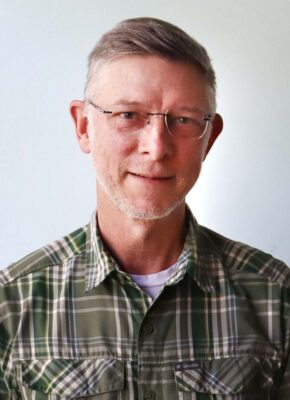
State Rep. Ken Helm
— Sophia Mick Photo

But in his final year prior to retirement in 2027, Helm, 60, rejected Democratic orthodoxy in a number of ways. Beginning in the 2025 legislative session, for instance, he agreed to share his committee chairmanship with state Rep. Mark Owens (R-Crane) in a show of bipartisanship at odds with Democrats’ dominance in Salem. And in his final session earlier this year, Helm felt emboldened enough to publicly split with his base—the environmental advocates who have upheld Oregon’s land use laws with religious fervor—saying he wanted “to save them from themselves.”

OJP spoke to Helm about his support for expanding farmstands, his thoughts about land use and agriculture, and his successful effort to raise nearly $40 million a year to benefit wildlife.

The interview has been lightly edited for brevity and clarity.

OJP: You made a floor speech on House Bill 4153, which would expand farm stands by allowing larger “farm stores” on land zoned for exclusive farm use, telling environmentalists and land use advocates you were saving them from themselves. What did you mean?

Ken Helm: Our land use advocacy community is going through a generational change. A lot of the folks who have been in that world for 30 to 40 years are moving on. Even so, the newer advocates are sort of modeling themselves after the old guard, which may not serve the cause in the future. I used the example of Ballot Measure 37, which voters passed in 2004. [Measure 37 required state and local governments to compensate landowners if environmental or land use regulations enacted after they acquired the property reduced its fair market value.] Measure 37 was bad policy, but it had a lot of popular support. I’ve been trying to explain this to some of my friends in the land use advocacy world: You’re getting outplayed here on farm stands. And whether 1000 Friends of Oregon likes them or not, people love farm stands. And they are not concerned whether we are conserving the best farmland in the world.

You also have implied that the Department of Land Conservation and Development wrote new farm-stand rules last year that differed from what had been discussed. Are you suggesting the agency put its thumb on the scale?

The draft rules that came out at the end of 2025 were not what the parties agreed on. It certainly caught many of the participants off guard. I don’t want this to sound too critical of good bureaucrats, but in many agencies you have folks that have been there 20 or 30 years and they internalize the agency mission very personally.

How much of that is a reflection of agency directors?

I’ll give you one example. When Tom Byler left the directorship of the Water Resources Department, the state recruited an outside successor who ended up not taking the job. Then the governor’s office determined that the best candidate was now-director Ivan Gall, an agency lifer. My co-chair and I were very unhappy and trying to figure out the best thing to do without blowing things up. We told the governor we would not oppose Gall’s appointment. We didn’t say we’d support it, but we wanted some changes. One, which is a basic step in corporate America but apparently not in state government, was a 360-degree review of top management. To his credit, Director Gall has done that, but when we first suggested it, I got a blank look like, what’s that? Now, that agency is well on its way to self-correcting.

You’ve described state agencies being allowed to pretty much operate however they want. Is part of the problem that citizen legislators lack subject-matter expertise so the bureaucracy rules?

In 2015, Gov. Kate Brown inherited agencies without any transition, then COVID happened. That left her without the bandwidth for natural resource agencies. They need a governor’s attention because they overlap in so many ways. That’s why other states have departments of natural resources, so that the collaboration and coordination occurs because they are all really one agency. I would add that the turnover in the Legislature after COVID has been extraordinary.

What about our current governor?

I think our governor is doing well on that front in my world, especially with her recent executive order that lays out how we can site wind and solar generating facilities faster and more efficiently while still within land use laws. My message to the governor was, we need leadership at the very top. And I think we can get there now, but we couldn’t get there four or five years ago.

You and Rep. Mark Owens (R-Crane) co-chair the House Committee on Agriculture, Land Use, Natural Resources, and Water. Given that your party holds a supermajority, how did the decision to share power with a Republican come about?

It goes back a ways. In the summer of 2016, I knew people in Harney County were struggling with overdrawing the aquifer there. I went to visit and met Mark, who was then farming but not yet in the Legislature. He was very clear-eyed about the problem. When he entered the Legislature in 2020, I asked the speaker to put him in the vice chair position immediately. Eventually, Mark and I started running the committee as co-chairs, and we launched a joint project to raise the visibility of water—because Oregon’s droughts and other water problems are not going to solve themselves. Republicans had long wanted a policy gavel. Before the 2025 session, House Speaker Julie Fahey (D-Eugene) asked, would you be open to having a co-chair? I was and we’ve been doing it that way since.

Some Democrats really don’t like giving up any power. What’s your response?

The proof is in the pudding. We got more money for water projects than any committee over the last two decades. And the governor just signed House Bill 4134—the biggest conservation bill we’ve had in decades. It is because of the collaboration with Mark. The bill will fund a nongame-species protection program at the Department of Fish and Wildlife for the first time. Nongame species are the lion’s share of Oregon’s wildlife, and ODFW is supposed to protect them. We are responsible for keeping them off the Endangered Species Act list—and if they go on, the state bears financial responsibility.

To pay for this new conservation, HB 4134 increased the hotel-motel lodging tax by 1.25 percentage points at a time the business community is hollering about taxes. How much heat did you take?

The hospitality industry felt like this bill was a slippery slope—they said, you’re going to dissuade people from coming here for conferences. Well, when we looked at what happens to nightly rates, during conventions and special events, they already gouge their own customers far more than this increase. This bill has the opportunity to have a transformative impact, like the Bottle Bill.

Earlier in your career, you helped craft emissions reduction legislation the Republicans ultimately killed with walkouts. What do you make of the Climate Protection Program, which replaced that legislation?

I think it is expensive, and I get why industry participants are unhappy. I think the state would be better off, both politically and economically, if we replaced it with a program that can attach itself to California, Washington or any other province or state that wants to link in a larger program.

Some left-leaning groups are trying to defeat Democratic incumbents in the May primary. For example, environmentalists are helping a primary challenger run against Sen. Janeen Sollman (D-Hillsboro) because she tried to expand the urban growth boundary in Washington County. Your thoughts? 

I don’t like it. I’m glad it’s not me. I would feel angry if it were. Whenever you mention the UGB, people’s hackles go up. But we need to have a serious conversation about urban growth boundary policy. We have the challenge of taking actions that will support the state’s long-term economic prospects. People want to attract high-paying, clean jobs. But there is also this sacrament we all participated in—not building on farmland. If we are going to save the “best farmland in the world” in the northern Willamette Valley, what are we saving it for? If we’re saving for grass seed fields and wheat, which are relatively low-value commodity crops, I’m not sure it’s worth it.

Total
0
Share