


Seniors tell about life’s daily issues, good and bad

Sean C. Morgan

Lobbyists and local residents testified Friday against cuts in Oregon Project Independence and adult foster care programs before the Senate Human Services Committee.

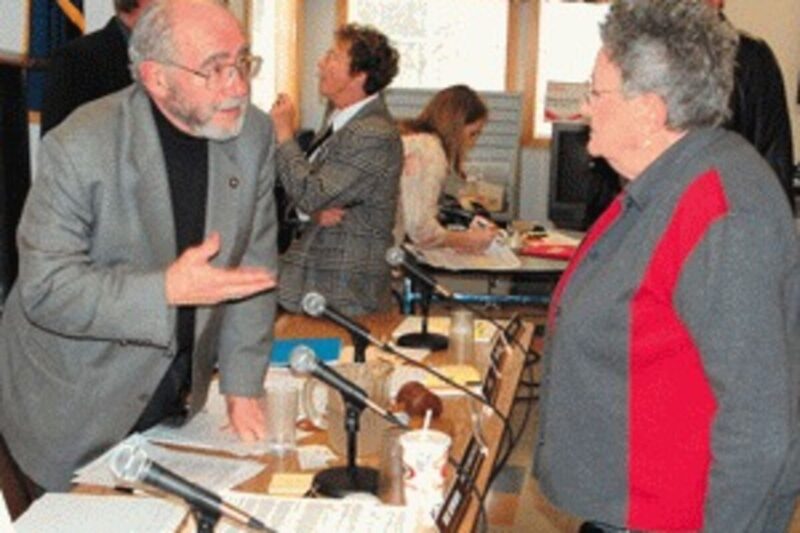
The committee met in Sweet Home at the Jim Riggs Community Center as part of an effort by Senate Democrats to bring the legislative process to local communities making it more accessible to the public.

Sen. Bill Morrisette, who represents the rural areas southwest of Sweet Home and parts of the Springfield-Eugene area, is chairman of the committee. Also attending were Vice Chairman Jeff Kruse and Sen. Charles Starr. Members Rick Metsger and Lauri Monnes Anderson were absent.

“I like to get out of Salem where real people live,” Sen. Morrisette said. He also drew chuckles warning one lobbyist using the acronym AAA that “we are an acronym-free zone. The acronym for this is AFZ.”

The committee sought testimony on long-term healthcare issues, including access to affordable drugs and the expansion of Oregon Project Independence, a program that allows seniors to remain independent. The committee also heard testimony on three bills and moved several bills to the Senate floor.

Nancy Ellis brought one of her social studies classes to the meeting to observe.

Programs allowing seniors to remain independent of nursing homes are among those slated for cuts in the governor’s proposed budget.

Testimony focused on protecting those programs or expanding them.

“You can’t get the type of care in any situation that you can from … a relative,” Marvella Gibbs said.

Talking about independence for seniors involved primarily two programs. Project Independence provides caregivers to help seniors in their homes with meals, laundry and other chores. The second program is that given by adult foster care, often relatives, to seniors who need more care.

Both programs, according to those testifying cost less than nursing home care; and in the case of those who tap public resources to pay for it, they cost taxpayers less.

Given the horror story told before her own testimony, Gibbs stressed the importance of helping seniors stay with their own families.

“We give up our lives for our parents, our aunts, our brothers,” Gibbs said. “We give it up because we care. We don’t do it for the money.”

Gibbs left a $32,000 job to stay home and care for her mother, she said. Later, she took in her aunt, whose daughter could not afford to quit her job to become a caregiver. She has since added her mother-in-law and expects to add her husband, a multiple sclerosis victim, soon. She continues to care for two.

If the dollars for in-home caregivers dry up, “I have to go to work,” Gibbs said. She wouldn’t want to put her charges into nursing care.

“They do not remember to eat,” Gibbs said. “They do not remember to take their medication.”

Even having workers come to their home to do housekeeping and cook for them would cost more, Gibbs said. “Many of them, I’m afraid, are going to end up with no care at all.”

Sunny Swanson, Gibbs’ sister, worked as a certified nursing assistant for several years at a defunct nursing home in Lebanon. She testified to the poor treatment of patients there. She retired early from a job in Idaho to come help her sister and give her a break from caring for her mom and aunt.

The seniors need constant supervision, Swanson said, but “youdon’t get that in a nursing home.”

The pay caregivers receive covers utilities, Swanson said. “I really don’t know what we would do if they took away funding for in-home care.”

“I hope you realize this program is not about money and numbers,” Michael Volpe of Corvallis said. “It’s about people.”

Volpe cannot move his legs and can barely move his arms, but the arms are not functional. He gets around in a motorized wheelchair and depends on a caregiver’s help for everything in his daily life.

Proposed cuts come at a time when the senior population is about to grow tremendously with the aging of the “baby boomers.”

“I see the scarcity of resources and see the demands exceed our ability to fund it,” Sen. Starr said. “It concerns me greatly.”

“One of the concerns we all share is that we keep them in their own communities,” Sen. Morrisette said.

Total
0
Share