


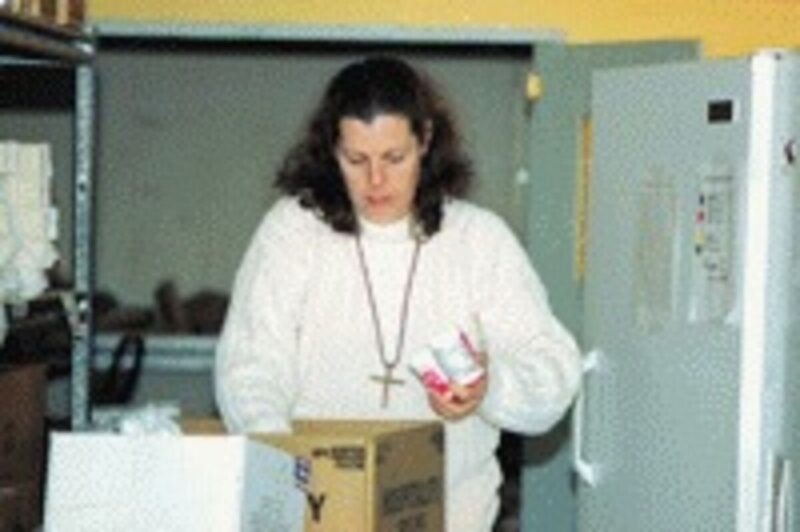
SHEM faces higher demand for food with less money

Sean C. Morgan

It’s an hour after Sweet Home Emergency Ministries has closed on Wednesday.

Director Rebecca McClaskey is working at her desk then talking about what SHEM is facing these days when someone knocks at the door.

She cannot resist opening the door and finding what has become all too common, a man without work but with a family to feed on Thanksgiving.

“I can’t turn anybody away,” McClaskey says.

She ushers the man in to fill out an application and prepares a Thanksgiving box for him.

Eric Wright sits down on a bench and begins filling out the paperwork but takes a few moments to talk about his situation.

Wright had just been laid off a week earlier, he said. Prior to that, he had been laid off another job. He got his most recent job after running out of money for rent or gas for his car.

Still he tried to make it to work. Unable to afford the gas, he ran out on the way to work constantly. Soon, he was laid off again.

“I didn’t know what to do,” Wright said. Thursday “I’m trying to get a job right now.”

He hopes to get a job close to home, perhaps with Weyerhaeuser, so he can get to work and get back on his feet.

It would be nice if someone could help with gas, but he had no luck with that.

“He called last week for gas,” McClaskey said. “We’ve cut so much of our financial (aid), I didn’t have enough money.”

SHEM used to provide money for gas, she said.

“We would have been okay if I could have made it just one more week,” Wright said.

Wright has a wife and a 7-year-old child.

“We hear that a lot,” McClaskey said.

His wife pulled things together after he lost his previous job, turning to Community Services Consortium, which helped the family pay back rent. That and the new job helped them get into a new house.

“I’ve never been out of work more than three days,” Wright, 27, said. “Two and a half to three months is unheard of.”

“I appreciate you doing this for me,” Wright told McClaskey. “It’ll make Thanksgiving that much better. It truly does make you feel a little more comfortable knowing there’s someone willing to help you out in time of need.”

“That’s what we see every day,” McClaskey said. “It’s frustrating, but you see the good stories too.”

She referred to a family that Weyerhaeuser Duraflake was able to place into a new home for Christmas.

It’s hard for many of the families to turn to programs like SHEM, McClaskey said. “When people come in here, and they’ve never been here before, pride is still intact. I remember I felt ashamed the first time I came into SHEM.… Most are strong, upright citizens, and they want to take care of their families.”

Now, SHEM itself is facing a difficult time helping the record-setting numbers of families seeking its help.

“The reason why families are hardest hit is because of housing the last decade has jumped 125 percent,” McClaskey said. In a nutshell, SHEM’s revenues are down by about 50 percent, and its demand has jumped from 163 boxes of food per month in 2000 to 261 last year and 311 this year.

In October, SHEM distributed 326 boxes of food to families. Each box provides about four days worth of meals.

“We’re looking for ideas on what we can do,” McClaskey said. “We don’t want to cut the food we put in a food box. That will be the last thing we do. We’ve already cut financial assistance.”

With high unemployment, the demand for help is bigger, tough economic times apparently means donations to United Way and churches are lower and thusly lower for SHEM.

“I don’t see an end to it any time soon,” McClaskey said. “It’s something we’re probably going to deal with the next few years.

“I want to get out the message that the biggest issue is our income is down, our expenses are up.… The community is always so good about responding. They’re the most giving community that I’ve ever lived in.”

That is where McClaskey is looking for help as the economy hits everyone, including donors.

“I’d like to see the community, churches or civic organizations get involved in fund-raising for us or suggestions if they know of grants,” McClaskey said. This time of year, SHEM’s storerooms are full with a variety of food drives, such as the recent Scouting for Food.

“Come March, and we’ll be in need,” McClaskey said.

There are a couple of ways the community can help.

Among them, SHEM receives a penny for every dollar in Thriftway receipts it receives from the public.

McClaskey also suggests an for competing businesses and rival civic groups. They could make some wager with each other on a food drive contest, with the winning business or group receiving something from its rival.

Children from Crawfordsville collected cans for SHEM, raising $20, which goes a long way at the Oregon Food Bank when food costs just 10 to 20 cents per pound.

For information about SHEM or to provide suggestions, persons may contact McClaskey at 367-6504.

Total
0
Share