


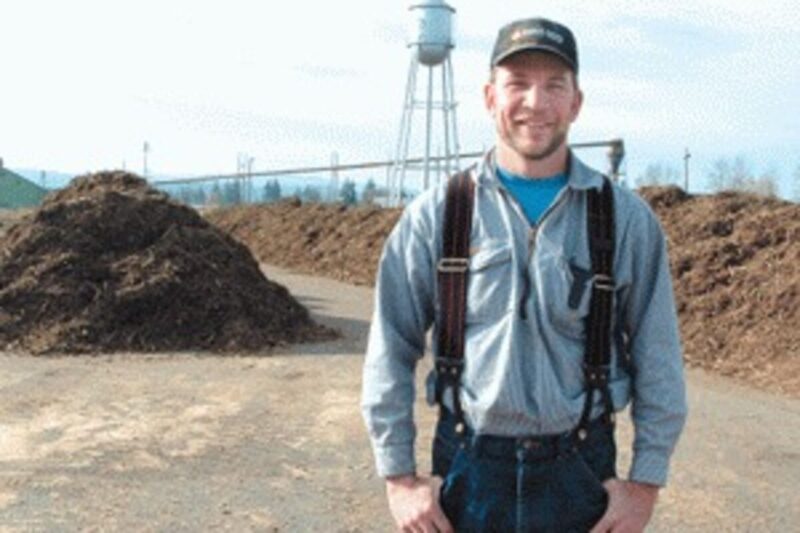
Totman Truck to start composting business

Sean C. Morgan

Totman Trucking will operate a composting business on the old Willamette Industries Sweet Home mill site until a permanent site can be completed just west of town.

The Planning Commission approved a two-year conditional use permit for the business last month.

The property, leased by Totman Trucking, is owned by the Western States Land Reliance Trust. Dan Desler is the managing trustee for the property. Eighty-five percent of proceeds from the property are donated to local charities.

Totman Trucking opened the composting business in July. Randy Hutchins is the director of composting.

The business recycles cardboard fibers exclusively for Weyerhaeuser. It also composts “feed stocks,” material ground and made into compost from various places all over the valley.

The material includes mainly limbs, leaves, grass and debris from land clearing, primarily from farms and land development.

Totman employees have mobile grinder they take to various sources. They grind the materials before bringing them to the old Willamette site. At the Willamette site, the material is placed in “windrows,” several long rows of the composting material.

When the product is finished, the compost is screened, leaving a fine soil, a half-inch or smaller, then sold wholesale or retail.

The compost adds nutrients and humus to the clay of the Willamette Valley, making it fertile and allowing water to move through the soil better.

Many farmers, gardeners and golf courses are using it as a natural alternative instead of chemical fertilizers, Hutchins said. It also helps in erosion control, soaking up some 50 percent of its mass in water.

Some of the cardboard fibers are used as compost, Hutchins said. Totman plans testing to find out its quality as compost. It also is used for bedding for cattle and horses. Totman sells some of it to a local man, who now operates the Energy Connection, to make insulation.

This type of composting is “getting more and more common,” Hutchins said. In 1996, when Hutchins developed a similar business in McMinnville, there were only three in the state. Now, most cities have a similar business.

The Planning Commission asked about whether the operation would have an offensive odor.

This operation won’t smell, Hutchins said. It uses an aerobic method for composting instead of anaerobic.

This means that employees turn the piles, ideally about every three days, Hutchins said. The air that gets churned into the windrows helps the microbes function more efficiently.

When the piles, approximately 2,500 tons, are not turned, the balance of air, water and heat is different, and a side effect is the odor.

Totman’s composting program includes less nitrogen-laden grass, which is more prone to creating odors, and more branches and twigs, which is richer in carbon.

One of the challenges is balancing nitrogen and carbon content, Hutchins said.

If managed correctly, materials are ready for sale within three months during the summer and five to six months during the winter, Hutchins said.

On average, the operation requires about three full-time equivalent employees, although the employees shift on and off the site to other operations.

“We’ll probably need three more people by next summer,” Hutchins said. “By this time next year, we’ll have probably as many as 12 on site.”

While the operation continues, Totman is busy developing an old mill site about two miles west of Sweet Home.

The company plans to consolidate all of its operations onto that single site, Hutchins said. “We spend a lot of time running from one to another (site). We’d like to put it all together.”

The new property will include a shop for the trucks and offices. The cardboard fibers must be kept as dry as possible, and a building there will help do that.

“Those are our goals, and we anticipate being able to accomplish that in under two years,” Hutchins said.

Total
0
Share