
Lebanon city budgets focus on priority needs, financial stability

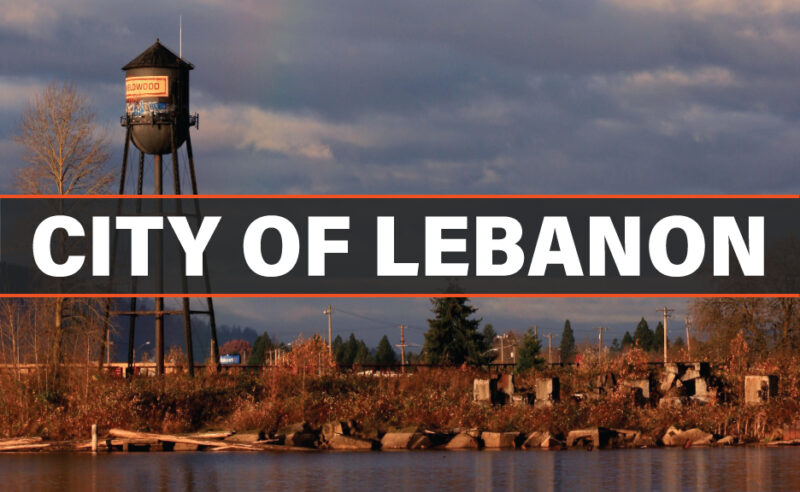
The City of Lebanon and Lebanon Urban Renewal Agency presented their proposed 2026-2027 fiscal year budgets to the Budget Committee on Thursday, April 16.

The proposed budget for the City of Lebanon focuses on carefully pursuing priority infrastructural needs while maintaining a shaky financial position, while the proposed budget for the Lebanon Urban Renewal Agency focuses on closing out two of its urban renewal districts.

City of Lebanon

City Manager Ron Whitlatch presented the city’s $87.85 million budget message, which focuses on “carefully maintaining essential city services while keeping finances stable.”

Staff structured the budget to provide the “community’s service expectations” and align with the City Council’s goals.

Whitlach noted the proposed budget is the second year of the city’s five-year strategic plan that focuses on strengthening core services, advancing important infrastructure projects and improving financial stability.

“The fiscal year 2027 budget aligns resources with these priorities and reflects the city’s commitment to carrying the strategic plan forward in a deliberate and fiscally responsible manner,” he said.

By using a five-year budget model for utility funds and the General Fund, the city can better respond to changing financial conditions, he said.

The $18 City Service Fee, implemented on utility bills last year, “addressed an ongoing structural deficit in the General Fund,” generating approximately $2 million a year to balance the fund. Without it, Whitlatch said, the fund would have grown deficits within the budget and ultimately reduce core city functions or eliminate certain programs.

“However, it is important to note that the fee is designed to maintain current service levels within the city’s core business and does not provide additional capacity to expand services as the community continues to grow,” he said. “The City Service Fee has helped us move toward long-term sustainability, but we still have limited room to expand services. Even so, this budget reflects our commitment to using resources wisely and ensuring the city’s financial health.”

Despite an improved financial outlook, projected deficits are still expected, including a planned deficit of approximately $409,933 in fiscal year 2027 and additional operating deficits in fiscal years 2030 and 2031.

“These projections highlight the need for continued monitoring and disciplined financial management,” Whitlatch said.

Changes to the budget include staff organization and “efforts to improve efficiency and clarity” – such as simplifying transaction recordings, but it also includes the addition of a LINX transit manager to help support the increasing day-to-day operations of the transit system, which has “experienced significant growth.” The position will be fully funded through state and federal transit grant programs.

Still, Whitltach said, “it is important to recognize that city departments continue to operate with lean staffing levels. This creates challenges in maintaining efficiency and makes it difficult and, in some cases, unsustainable to take on new programs or expanded service levels without additional staffing resources.”

Major capital projects in the works include: Grant and Sherman street improvements, a traffic signal at Airport Road and Twelfth Street, Cheadle Lake Park improvements, the wastewater treatment plant biosolids project, N 5th reconstruction from Tangent to Mary streets, and small sewer and waterline replacement projects.

Additional infrastructure and operational considerations include:

  • Limited funding for street maintenance and repair, and decreasing state support for street work.
  • Regulatory requirements for wastewater treatment plant upgrades, adding up to an expected $95 million in costs for the next 20 years. Additional rate increases may be necessary.
  • Increased water treatment challenges and costs associated with turbidity in the South Santiam River from the Green Peter drawdowns.
  • Reduced eligibility for certain grant programs due to the city surpassing a population of 20,000.

As external funding and grants become increasingly necessary, the opportunities to secure such funding are competitive and often come with “complex” requirements that require significant staff time and resources, which is already limited.

The proposed fiscal year 2027 budget also reflects the final year of payments to pay off and close the Northwest and Downtown URDs. Closure of the districts will increase revenue to the city’s General Fund and other agencies that rely on property tax funding.

Lebanon Urban Renewal Agency

Presenting the budget message for the Lebanon Urban Renewal Agency (LURA), Whitlatch explained the agency facilitates “targeted investment in areas of the community that would not otherwise see development at the same pace or scale.”

Through tax increment financing, urban renewal districts (URD) support infrastructure improvements, redevelopment projects and economic activity that ultimately increase assessed value within its districts over time.

LURA currently maintains five URDs – Northwest, Cheadle Lake, North Gateway, Downtown and Mill Race.

Total expenditures for fiscal year 2027 are proposed at $8.6 million, an increase compared to the current year’s budgeted $7.4 million. The increase, Whitlatch said, is primarily due to the agency’s intent to accelerate and finish debt service payments in the Northwest URD and increase capital spending planned for the North Gateway URD.

During the past few years, LURA has focused on accelerating debt repayment across its URDs, he said. This will reduce long-term interest costs and return property tax revenue to other jurisdictions, thus benefiting public safety and schools.

By the conclusion of fiscal year 2027, LURA anticipates closing the Northwest and Downtown URDs, representing “a significant milestone, as the assessed value growth generated within these areas will once again be fully available to overlapping taxing districts.”

Total
0
Share