


Lebanon’s WesternU expansion conceptual plan approved

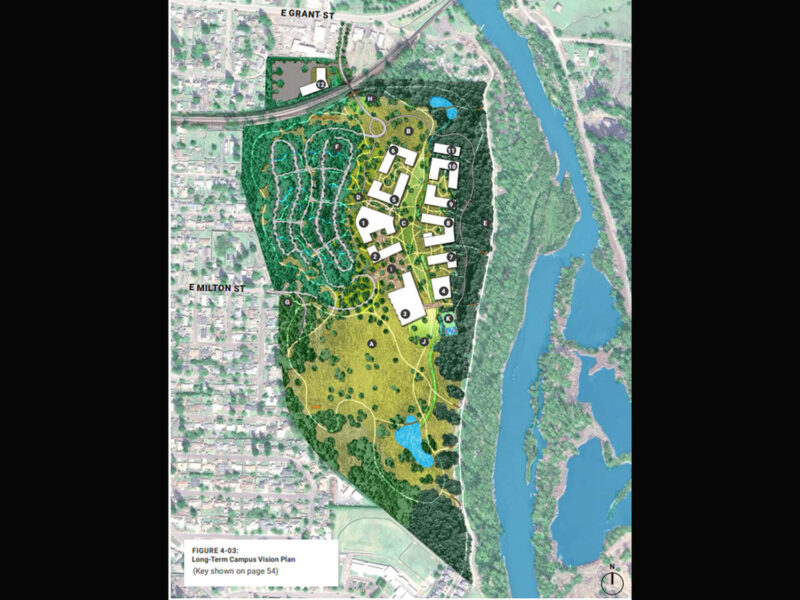
The 30-year development of WesternU’s colleges in Lebanon at its new location includes three phases and consideration of park-like settings and habitation for wildlife. — WesternU images

The Lebanon Planning Commission approved  a conceptual master plan for the phased development of Western University’s proposed expansion at a former mill site during its April 15 meeting.
Western University of Health Sciences operates the College of Osteopathic Medicine of the Pacific Northwest (COMP-NW) in Lebanon. It acquired the old mill site by donation from the Heatherington Foundation for Innovation and Education in Health Care, with an additional financial donation of $22.5 million from FamilyCare, Inc.

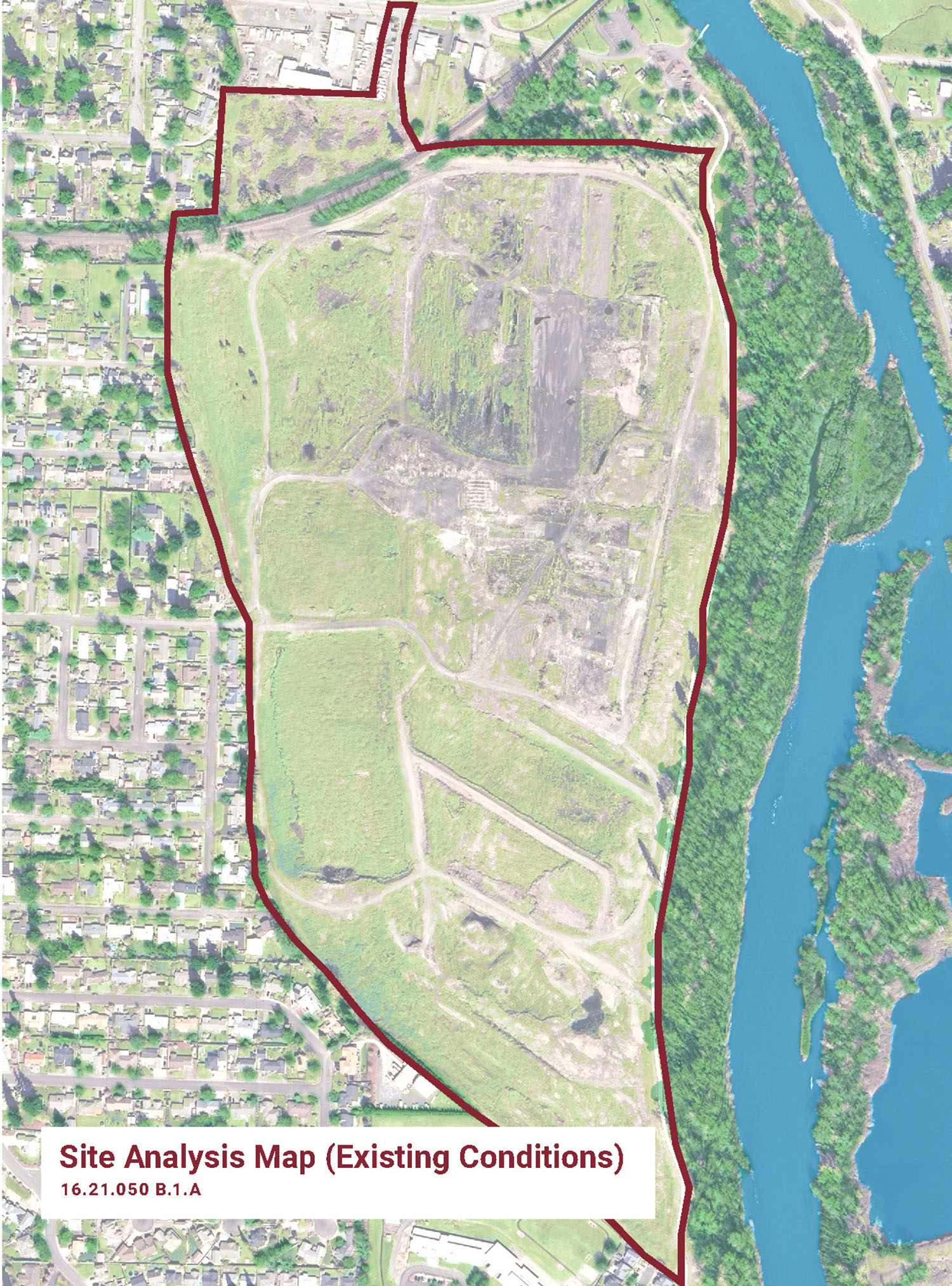
The 110-acre site is sandwiched between E Grant to the north and Riverview School to the south, bordered on the east by the South Santiam River.

The three-phase plan proposes a total of about 500,000 square feet of development to accommodate 1,200 students and 415 staff. Phase 1 is planned for 2026 to 2035, Phase 2 is planned for 2036 to 2045, and Phase 3 is planned for 2045 to 2055.

Phase 1

Phase 1 includes three buildings totaling 177,000 square feet to accommodate 520 students and 180 staff. Development Services Director Shana Olson said the college is expected to be a “commuter institution,” daily drawing in staff and students from throughout the Willamette Valley.

Primary access to the school is expected to come from E Grant Street via a road situated between an RV storage facility and a commercial building.

Between E Grant Street and the campus is an elevated railway. WesternU is waiting to hear whether they will be awarded an ODOT Connect Oregon grant that will help the university build an underpass under the railroad during Phase 1.

An additional entry point comes from E Milton Street.

In her report, Shana says “Significant portions of the site are designated as open space, natural areas and recreational amenities, including trails and passive use areas.”

Kim Olson, architect with Mahlum Architects, explained the development’s focus includes “looking at the campus in a way that will support the students, but also thinking about the ecological health of the site, and the community health and how the campus can become a partner to the community as well.”

The developers “paid a lot of attention” to flora and fauna on the property, keeping in mind how they can build while also maintaining a safe habitat for native plants and animals.

“One of the things we considered was how do we do that in a way that respects the history of the site,” Kim said.

They identified floodplain river forest, oak savannah and woodland history on the property.

The developers also designed the campus to be pedestrian-friendly in a park-like setting, with paths and bike trails throughout.

A resident from Park Drive, located off E Milton Street near the proposed campus, said that although he likes the college, he has concerns about traffic on E Milton Street. He expects the street will have a heavy traffic flow, with it being backed up when a train crosses E Milton near S Williams Street.

“We also are very concerned about the traffic on Milton and we’ll make every effort to have all of the people coming to and from the campus understand the situation on Milton and use our main Grant Street entrance,” said Lyle Hutchens, of MCH Project Strategies, LLC.

Find more images and the full agenda packet for the meeting below:

Total
0
Share